
The issue raises an important question about how the government will keep Hajj costs under control when the minimum service standard has been raised and the final prices of services have yet to be settled.
- It sets out the facilities and services that companies must provide to pilgrims, including accommodation, transport, food, medical facilities, security, cleaning, electricity, air conditioning and other camp arrangements.
- The absence of final costs also raises questions about how the government will ensure that the money paid for Hajj services matches the quality and facilities promised to pilgrims.
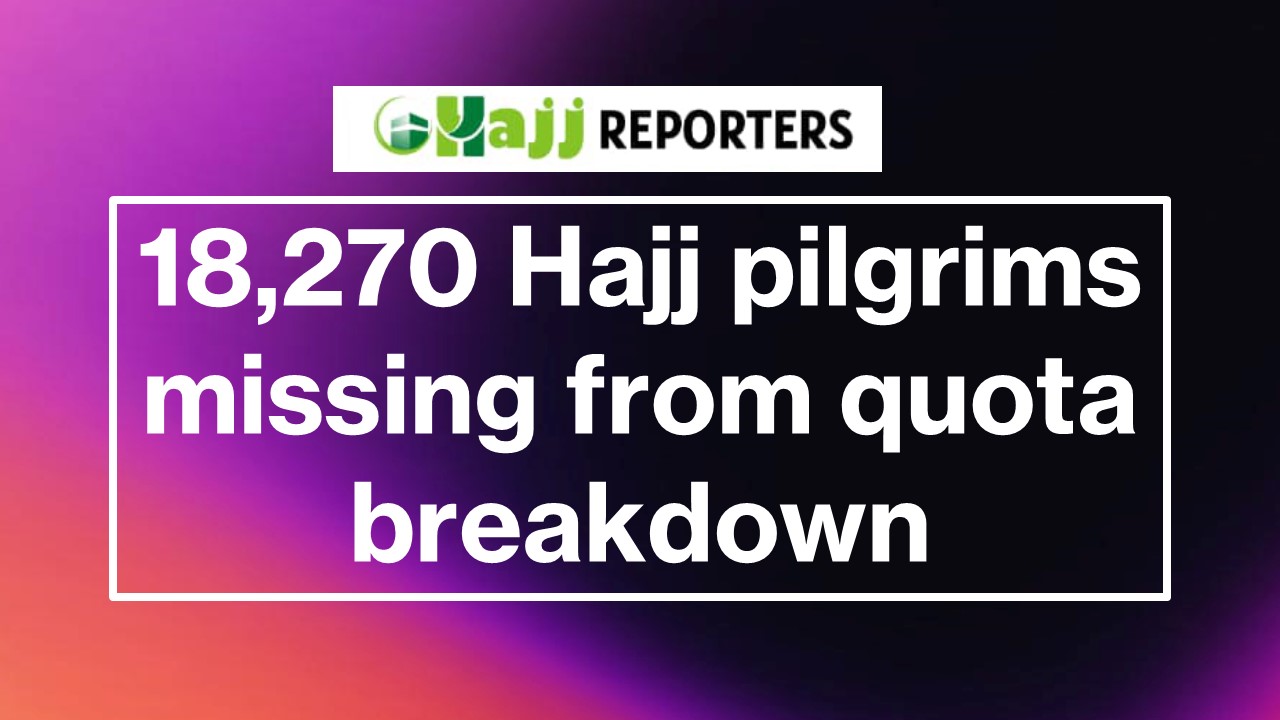
A major gap in Pakistan’s Hajj 2027 quota figures and an expected increase of up to Rs50,000 in the short Hajj package have raised questions over the government’s preparations for the next pilgrimage, after an official reply to the Senate revealed that the figures provided for government and private schemes do not add up to the country’s total quota.
According to the Ministry of Religious Affairs and Interfaith Harmony, Pakistan has received a total Hajj quota of 197,210 pilgrims for 2027. However, the government says 107,256 places have been allocated to the Government Hajj Scheme and 71,684 to the Private Hajj Scheme.
These two allocations add up to 178,940, leaving 18,270 places unexplained in the written reply. The ministry has not clarified how the remaining places will be used or why the breakdown does not match the total quota.
The reply was submitted in response to Senate Question No. 22 moved by Senator Kamran Murtaza, who sought details of Pakistan’s Hajj quota, the division between government and private schemes, the abolition of Category D and the expected effect on the cost of Hajj.
The biggest concern for intending pilgrims is the expected increase in Hajj expenses following the abolition of the traditional Category D service package.
The ministry stated that Category D was abolished by Saudi Arabia’s Ministry of Hajj and Umrah, not by Pakistan’s Ministry of Religious Affairs. Saudi authorities have made Category C the minimum service standard for pilgrims from around the world. The new Category C package is described as an upgrade over the former Category D services.
As a result, Pakistani pilgrims are expected to pay more for Hajj in 2027. The ministry estimates that the short Hajj package could become Rs50,000 more expensive, while the long Hajj package could increase by Rs10,000.
However, the ministry has made it clear that these are only estimates. The final cost will depend on the prices of different services when they are procured from the market.
Ad powered by advergic.com
This means that pilgrims still do not have a confirmed final price, even though the government has already indicated that the removal of Category D will increase their expenses.
The issue raises an important question about how the government will keep Hajj costs under control when the minimum service standard has been raised and the final prices of services have yet to be settled.
The 34 page document attached to the Senate reply contains detailed specifications for the new Hajj services. It lists 115 service items covering arrangements in Mina, Arafat, Makkah, Madinah and the entry point at Manfath.
Ad powered by advergic.com
The document divides services into three packages, A, B and C. It sets out the facilities and services that companies must provide to pilgrims, including accommodation, transport, food, medical facilities, security, cleaning, electricity, air conditioning and other camp arrangements.
The requirements show how extensive the arrangements are and how many different services must be arranged before pilgrims can perform Hajj.
For Mina and Arafat, the specifications cover camp facilities, tents, lighting, fans, air conditioning, corridors, toilets, water, sleeping arrangements and security. They also include surveillance cameras, fire safety equipment, emergency arrangements and facilities for people with disabilities.
The requirements include proper lighting in tents and corridors, air conditioning systems, drinking water, food arrangements, medical rooms and first aid facilities. Companies are also required to arrange sleeping materials, pillows, blankets, carpets and other basic facilities for pilgrims.
The document also sets requirements for kitchens, dining halls, refrigerators, water heaters, food storage and meal services. It includes arrangements for breakfast, lunch, dinner, snacks and drinks.
For medical services, the specifications include doctors, nurses, first aid rooms, medicines, medical equipment and facilities for handling emergencies.
Security arrangements include security guards, surveillance systems and monitoring facilities. Cleaning services, plumbers, electricians, air conditioning technicians and other support staff are also included in the requirements.
The document separately lists services for Makkah and Madinah. These include accommodation, food, customer service, guidance for pilgrims, religious information, reception facilities and transport arrangements.
At the entry point in Manfath, the requirements include receiving pilgrims, checking their information, providing guidance, arranging transport and registering their details. The document also calls for electronic reading devices to help record information and manage pilgrim movement.
The three packages contain different service requirements, and the document marks several facilities as mandatory or non mandatory. This makes the package specifications important because the services actually provided to pilgrims will depend on the package and the conditions set for each item.
Despite the detailed list of 115 requirements, the Senate reply does not provide the final procurement costs for these services. It also does not give a final package wise price for pilgrims after the change in the minimum service category.
The ministry has said that actual costs will depend on the market rates of the services to be procured. This leaves the final financial burden on pilgrims uncertain until the procurement process is completed.
The absence of final costs also raises questions about how the government will ensure that the money paid for Hajj services matches the quality and facilities promised to pilgrims. With hundreds of service requirements involved, proper monitoring of contracts, payments and delivery will be important to prevent waste of public money and protect pilgrims from receiving poor services.
SOURCE: MUNITESMIRROR.COM
