
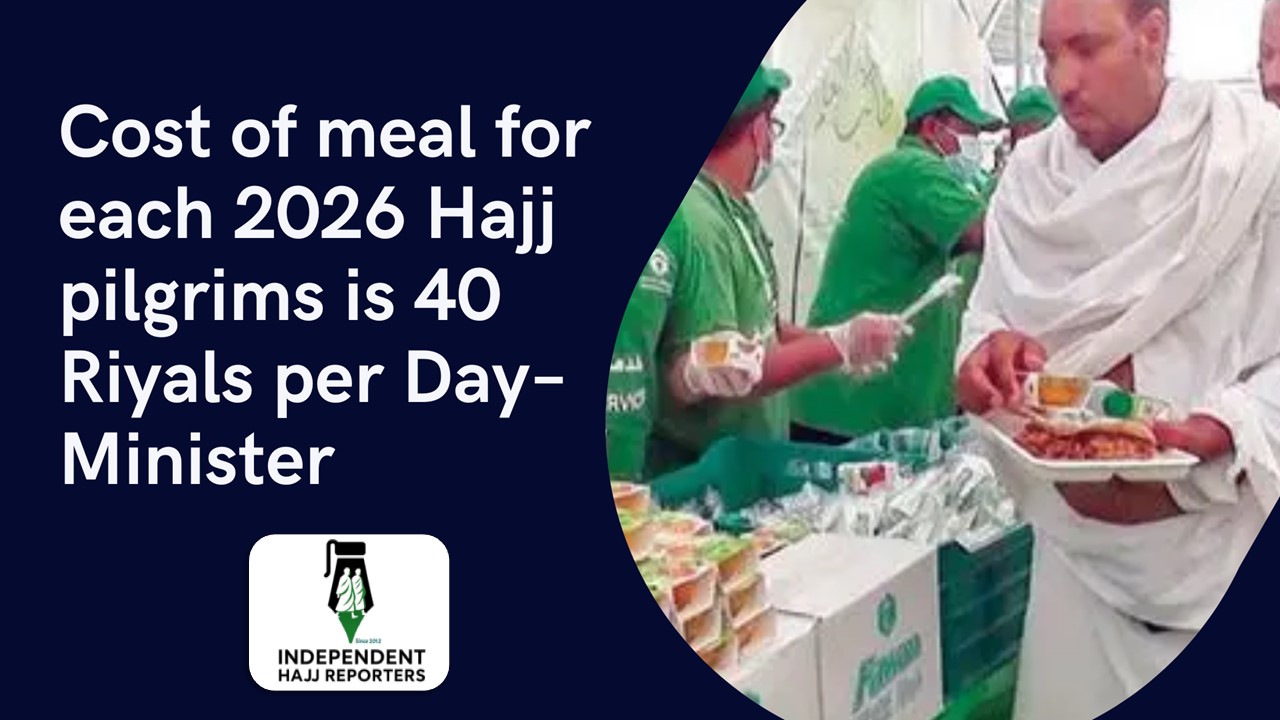
JAKARTA – Deputy Minister of Hajj and Umrah (Wamenhaj), Dahnil Anzar Simanjuntak, said that the allocation of consumption costs for one person to perform the 1447 Hijriah/2026 AD Hajj in the Holy Land is 40 Riyals (SAR) per day.
Dahnil explained in detail the price unit of catering or meal costs for Indonesian pilgrims while in the Holy Land so that the public, especially the pilgrims, understand the rights they should receive.
The cost of consuming 40 Riyals per day includes three meals with specific distribution details.
“We open everything, for example, related to catering, what is the price of catering? One day it’s about 40 riyals,” said Dahnil in Jakarta, Monday, quoted by Antara.
He detailed that from the 40 Riyals, the allocation was divided into 10 Riyals for breakfast, while lunch and dinner were each budgeted at 15 Riyals.
Dahnil highlighted the price efficiency compared to previous years. For lunch and dinner, which used to be pegged at 17 riyals, it has been reduced to 15 riyals.
The price reduction is claimed as a form of negotiation and extraordinary efficiency without reducing quality standards.
The government emphasized that even though prices have dropped, the specifications of food, nutritional value, and gramasi or portion weight remain the main priority that must not be reduced in the slightest by the catering provider (masyariq). This transparency does not only apply to the consumption sector.
The Minister of Hajj emphasized that the cost of accommodation, including the standard of hotels used by pilgrims, was also opened to the public.
The goal is to create an open hajj ecosystem. By knowing the cost of capital that the government has spent, hajj pilgrims can measure the feasibility of the services they receive in the field.
“The congregation must also know, so that they understand their rights, understand their obligations. Therefore, we want all parties to be involved so that they control each other,” said Dahnil.
The policy of open pricing is expected to minimize the potential for misappropriation of funds from the community and ensure that service providers in Saudi Arabia do not play around in serving God’s guests.
