


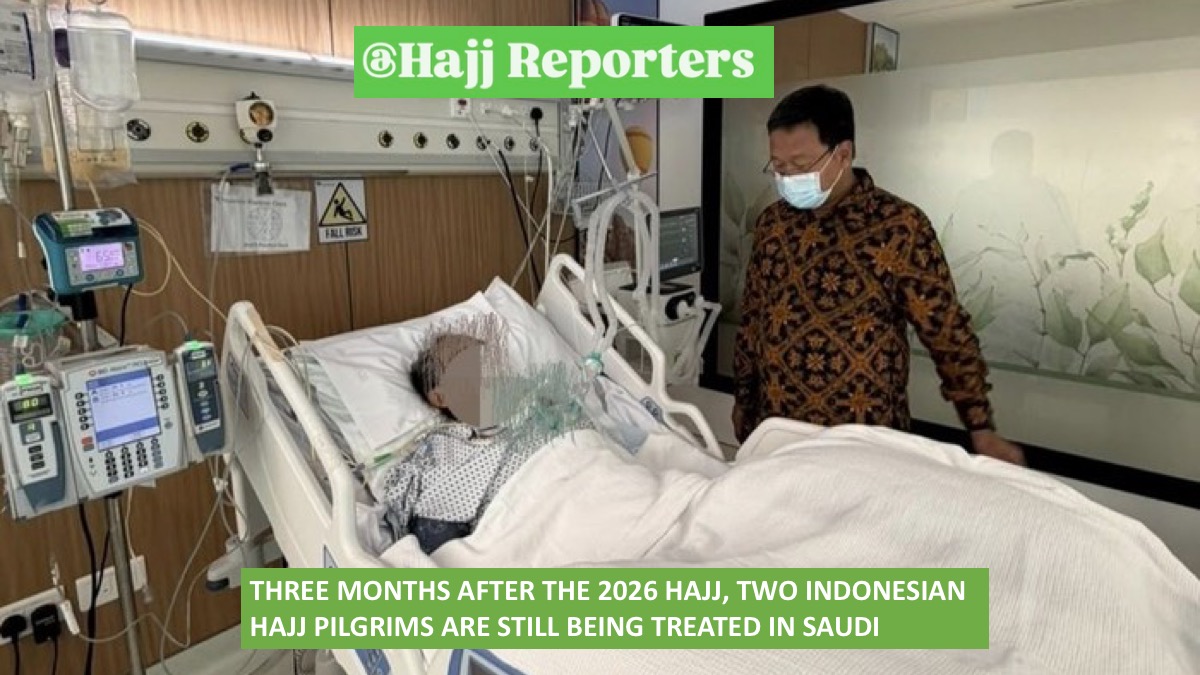
Jakarta – Two Indonesian Hajj pilgrims are still undergoing medical treatment in Saudi Arabia even though the entire 2026 Hajj pilgrimage has ended since early July 2026. Although it has been going on for approximately three months, the Ministry of Hajj and Umrah (Kemenhaj) continues to monitor the condition of the two until they are declared recovered.
As reported on the Ministry of Hajj’s official website on Wednesday (October 21, 2026), Dr. Dani Pramudya, Acting Head of the Hajj and Umrah Health Center, stated that the two pilgrims are still receiving treatment at different hospitals. One is being treated in Medina, while the other is being treated in Jeddah.
“Currently there are two Hajj pilgrims who are still being treated in Saudi Arabia. One is being treated at Khaybar General Hospital, Madinah and another pilgrim is being treated at Dr Samir Abbas Hospital, Jeddah,” said Dr. Dani.
Dani explained that the two congregations came from Lamongan, East Java, and Tangerang, Banten.
The number of Indonesian Hajj pilgrims still requiring medical treatment in Saudi Arabia has significantly decreased. Initially, after the Hajj pilgrimage concluded, around 60 pilgrims were still undergoing treatment. That number has now dropped to two.
Dani hopes that the two congregants will recover quickly so they can return to their homeland and be with their families.
“Hopefully the two Hajj pilgrims who are still being treated in Saudi Arabia will soon return to health and be able to reunite with their families in Indonesia,” said Dani.
Hajj Pilgrims Experience Heart Attacks and Lung Infections
Dani revealed that Indonesian Hajj pilgrims requiring medical treatment in Saudi Arabia are experiencing various health problems, some of which are serious and require intensive treatment.
These diseases include heart attacks, severe strokes, hypertension, diabetes, and lung infections.
The health of pilgrims is a crucial aspect of the Hajj pilgrimage. During their stay in Saudi Arabia, pilgrims must undertake a series of rituals that require stamina, walk significant distances, and adapt to weather and environmental conditions that differ from those in Indonesia.
Factors such as age and history of illness also need to be taken into consideration in preparing the congregation to be able to carry out worship safely.
The Ministry of Hajj Reminds 2027 Hajj Pilgrims to Maintain Their Health
Dani said that the aspect of health istithaah will be one of the focuses in preparations for the 2027 Hajj. Health istithaah relates to the physical and mental abilities of pilgrims to carry out the series of Hajj rituals.
He urged prospective pilgrims to start maintaining their physical condition well in advance of their departure. This effort is necessary to better prepare them for the physical exertion of their time in the Holy Land.
“We hope that the 2027 Hajj pilgrims will truly take care of their health, both physically and mentally,” he said.
According to Dani, the differences in natural conditions between Indonesia and Saudi Arabia are important considerations. Air temperature, weather, physical activity, and congregational density can all impact physical condition during the pilgrimage.
“Maintaining health is important, because the natural conditions in Indonesia and Saudi Arabia are different,” he said.
He also reminded prospective pilgrims to diligently undergo medical check-ups (MCUs). These examinations are crucial for assessing their health before departure.
“By maintaining good health, pilgrims can achieve good results during the MCU, thereby fulfilling their health needs,” Dani concluded.
