


By Pelumi Adesokan
Former Chairman of the National Hajj Commission of Nigeria (NAHCON), Alhaji Zikrullah Kunle Hassan, has highlighted a proposed transition to 30 per cent private-sector participation in Nigeria’s 2027 Hajj operations, urging tour operators to strengthen their capacity ahead of the changes.
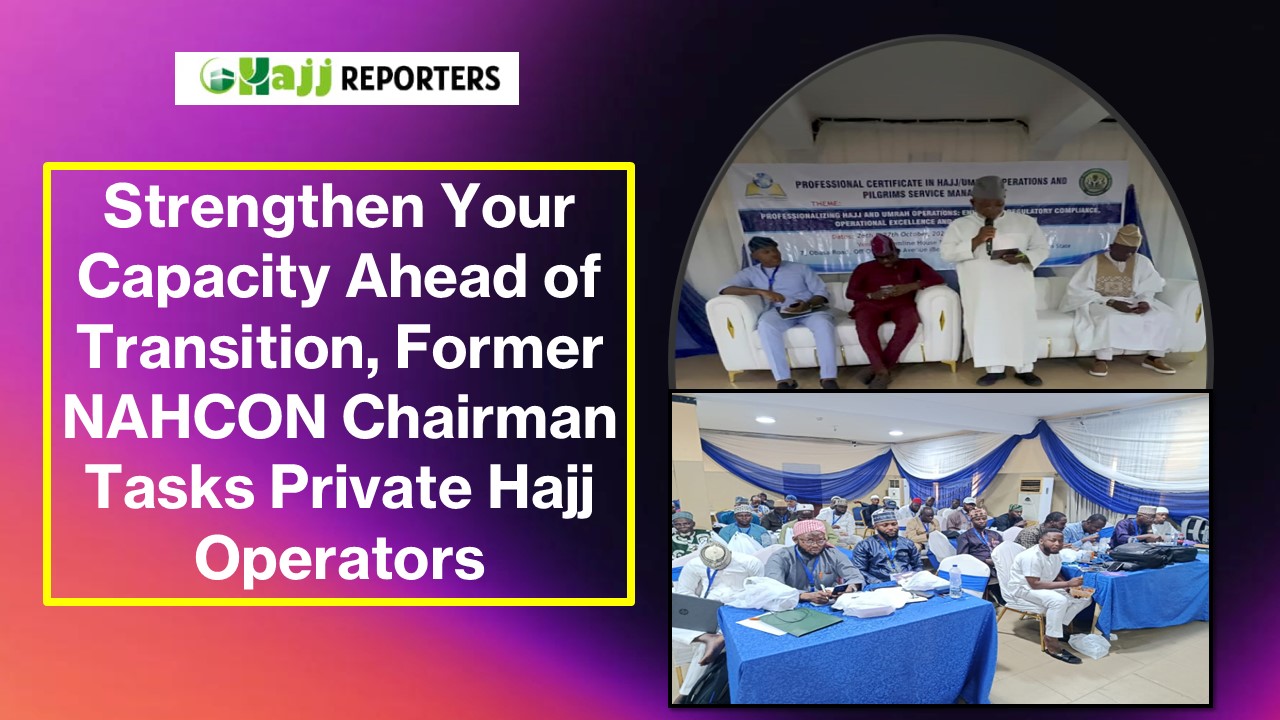
Hassan, who is chairman of the Fajr Centre and former Chairman of NAHCON, spoke in Lagos at the Professional Certificate Programme in Hajj/Umrah Operations and Pilgrim Service Management for NAHCON-licensed tour operators.
He said Saudi Arabia’s Vision 2030 reforms were transforming the global Hajj industry through increased digitalisation, private-sector participation and greater emphasis on service quality and commercial accountability.
According to him, the emerging business-to-business (B2B) model envisages transferring responsibility for managing up to 98 per cent of pilgrims to private operators.
He commended the current NAHCON leadership, under Ambassador Ismail Abba Yusuf, for its engagement with Saudi authorities, which he said had provided Nigeria with a phased transition beginning with 30 per cent private-sector participation in 2027.
Hassan, however, said the transition would require operators to demonstrate adequate financial, technical, institutional and managerial capacity.
He urged them to strengthen regulatory compliance, maintain transparent financial records, improve contract management and invest in digital systems to enhance accountability and service delivery.
The former NAHCON chairman also called for stronger cooperation among tour operators and their associations, warning that fragmentation, unhealthy rivalry and mutual suspicion could undermine the industry’s collective interests.
He said pilgrims’ safety, dignity and satisfaction should remain central to Hajj operations, adding that the success of operators should be measured by the quality of services delivered rather than the number of pilgrims transported.
Hassan further urged the Hajj Institute of Nigeria to expand professional certification, competency assessments and specialised training to prepare operators for their increasing responsibilities.
