


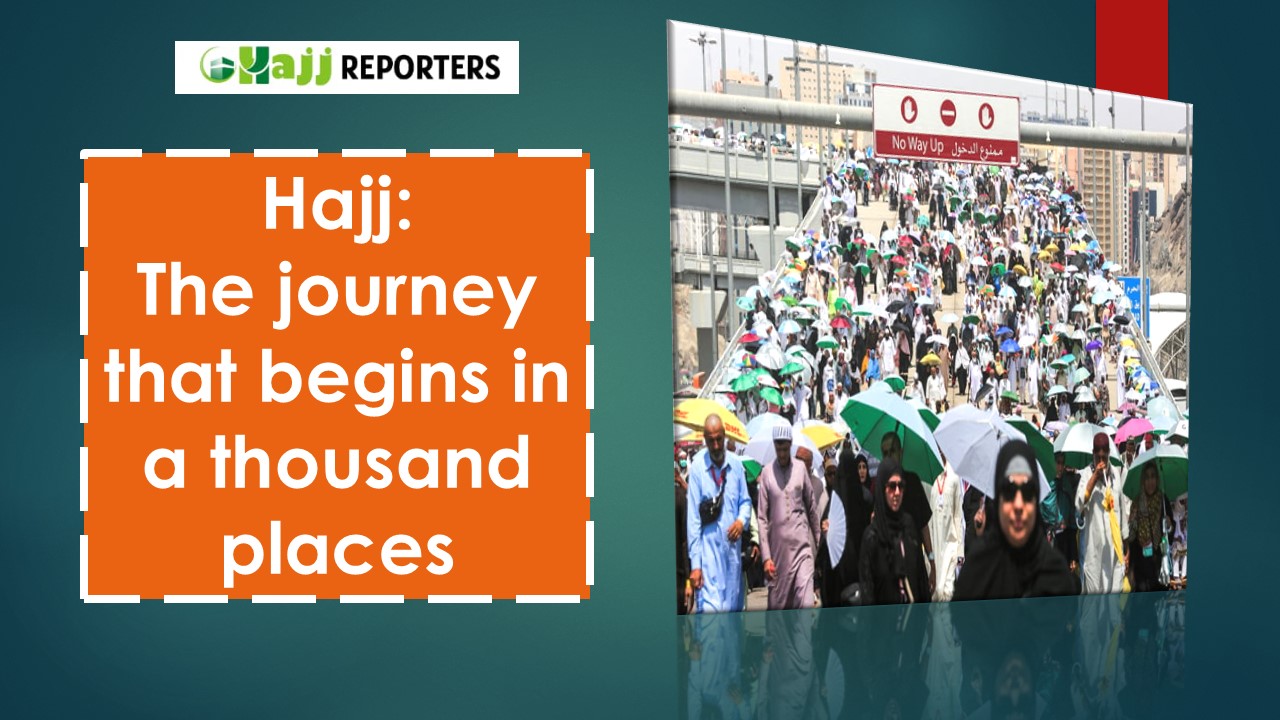
An airline can bring a pilgrim to Saudi Arabia on time. A transport company can have its buses ready. A hotel in Makkah can have a room waiting. Yet the pilgrim may still face hours of uncertainty if the arrangements connecting those services fall short.
That is one of the great challenges of Hajj. Millions of people travel from different countries, speaking different languages, to perform the same sacred rites within a limited period. They depend on services delivered by many organisations, but experience them as one journey, often undertaken after years of waiting and sacrifice.
No pilgrim experiences Hajj as a collection of contracts, agencies and service providers. What matters is whether the journey works.
The world sees the extraordinary gathering in Makkah and the holy sites. It seldom sees the preparations behind it: decisions made months in advance, in Saudi Arabia and in the countries from which pilgrims depart, that help determine how smoothly the journey unfolds.
Advertisement
Much of that work comes down to coordination. An airline’s arrival schedule affects the buses waiting outside the airport. A delayed transfer can disrupt accommodation arrangements further along the route. A change that appears minor to one service provider may create hours of difficulty for someone who has just completed a long and exhausting journey.
Each organisation may be doing its job well. The harder question is whether they are working well together.
This is why the sixth Hajj Conference and Exhibition, scheduled to take place in Jeddah from November 8 to 11, deserves attention beyond the usual announcements of participants, agreements and new technologies.
Organised by Saudi Arabia’s Ministry of Hajj and Umrah in cooperation with the Pilgrim Experience Program, the conference is expected to bring together more than 520 public, private and nonprofit organisations, alongside representatives of Hajj affairs offices, as preparations for the 2027 season gather pace.
Advertisement
The number is significant, but the more interesting question is what happens when those organisations sit together.
Hajj affairs offices understand the needs of pilgrims travelling from their countries, including language, customs and the practical difficulties that can arise long before arrival in Saudi Arabia. Saudi authorities and service providers bring extensive experience in transportation, accommodation, healthcare and movement through the holy sites.
Neither perspective is sufficient on its own. The greatest improvements often come from understanding what happens where one organization’s responsibility ends and another’s begins.
Technology can help close those gaps, but it cannot replace that understanding.
A sophisticated digital platform may make perfect sense to the people who designed it, yet offer little comfort to an elderly pilgrim who struggles to navigate a smartphone or read instructions in an unfamiliar language. The question is not simply whether a new system works, but whether it works for the people who must rely on it.
The same applies to innovation more broadly. Not every improvement needs to be dramatic. Clearer directions, better communication between service providers and more reliable information at the right moment can make an enormous difference to someone navigating an unfamiliar environment.
Saudi Arabia has accumulated an unusual depth of experience in managing Hajj. Few places face the recurring challenge of moving and caring for such large numbers of people, from so many backgrounds, within such a concentrated period.
That experience has relevance beyond the pilgrimage itself. Cities, public-health authorities and organisers of major international gatherings also wrestle with questions of crowd movement, transport, safety and coordination.
There is much that others can learn from the Saudi experience. Equally, research and practical insights from other countries can contribute to improving services for pilgrims. The value of such exchanges lies not in presenting one model as universally applicable, but in examining what works, what does not, and why.
This is where the conference has an opportunity to become something more consequential than an annual gathering.
Advertisement
After five previous editions, its challenge is not simply to attract more participants or announce more partnerships. It is to ensure that the conversations held in Jeddah lead to better decisions, stronger working relationships and practical improvements that survive long after the exhibition stands have been dismantled.
A conference that encourages this kind of exchange can do more than showcase progress. It can help institutions learn from experience before the next Hajj season puts their preparations to the test.
There is also a larger opportunity for Saudi Arabia. The knowledge developed through decades of organising Hajj deserves a place in international conversations about managing complex public services and major gatherings. The conference can help create that connection, provided its influence is measured by the knowledge it generates and the relationships it sustains, rather than by attendance figures alone.
For pilgrims, however, none of these institutional ambitions is the point.
What matters is finding the right bus after a tiring flight, receiving help in a familiar language and reaching accommodation without unnecessary confusion. These are the moments in which good planning becomes meaningful to the people it is meant to serve.
A successful Hajj is not simply the sum of well-run services. It is a journey in which those services work together so naturally that pilgrims can devote their attention to the reason they came.
Source: Guardian Newspapers
