


By Pelumi Adesokan
The quality of leadership is often measured not by the challenges confronting an institution but by the ability to inspire change, strengthen its systems and deliver results despite prevailing constraints.
In the Hajj industry, where effective service delivery depends on coordination among governments, regulators, private operators and several service providers, leadership requires pragmatism, institutional discipline and a clear understanding of the changing demands of pilgrimage management.
These qualities are increasingly important to the National Hajj Commission of Nigeria (NAHCON) as it navigates the evolving expectations of the global Hajj industry under the leadership of its Chairman and Chief Executive Officer, Ambassador Ismail Abba Yusuf.
For observers of the Hajj industry, the commission’s recent efforts point to a gradual shift towards improved operational coordination, professional development and stronger institutional capacity to respond to the growing complexity of Hajj administration.
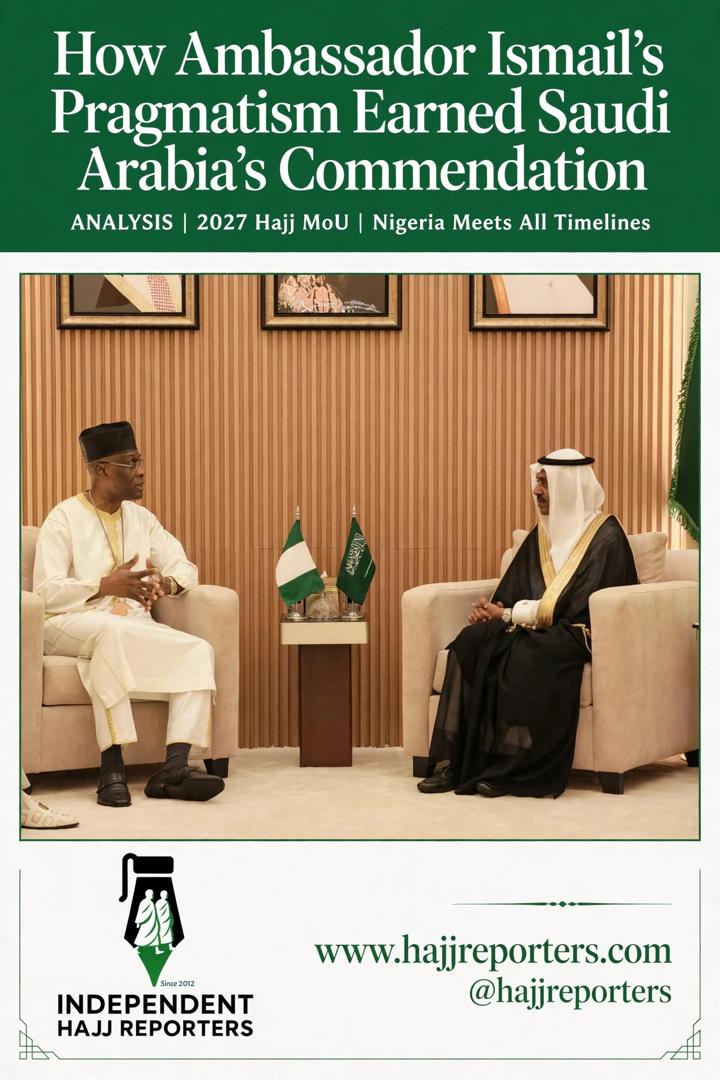
A significant indication of this progress came during the signing of the 2027 Hajj Memorandum of Understanding between Nigeria and Saudi Arabia in Jeddah.
At the ceremony, attended by Nigeria’s Ambassador to Saudi Arabia, Ambassador Yakubu Gambo, and members of the National Assembly led by the Chairman of the House Committee on Hajj Pilgrimage, Hon. Jafar Mohammed, Saudi Arabia’s Vice Minister of Hajj and Umrah, Dr Abdulfattah bin Sulaiman Mashat, disclosed that the Kingdom recorded a 93 per cent pilgrim satisfaction rate during the 2026 Hajj.
He commended Nigeria for contributing to the achievement and particularly praised the country for meeting established operational timelines ahead of the 2027 pilgrimage.
The commendation is significant because meeting Hajj deadlines requires more than administrative correspondence. It involves early planning, coordination with state pilgrims’ welfare boards and licensed tour operators, compliance with Saudi regulations, timely documentation and effective communication among stakeholders.
Mashat’s remarks therefore provide an important recognition of Nigeria’s operational performance, although sustaining the progress will require continued institutional commitment.
Beyond routine administration
Under Ambassador Yusuf, NAHCON’s reform agenda has been associated with several areas of institutional repositioning.
One is transparency and accountability in the allocation of Hajj slots. The commission has emphasised published allocation criteria, compliance with application timelines and action on unused allocations. The reported withdrawal and redistribution of slots not applied for within the stipulated period reflects the importance of ensuring that available opportunities are not left unused.
Another major development is the reported increase in Nigeria’s 2027 Hajj quota from 50,000 to 60,000 pilgrims following additional approval from Saudi authorities. If sustained and reflected in the final operational arrangements, the increase would provide more Nigerians with the opportunity to undertake the pilgrimage.
The transition towards greater private-sector participation is also an important part of the evolving Hajj management structure. Under the proposed three-year phased arrangement, private operators are expected to handle 30 per cent of operations in 2027.
The development aligns with Saudi Arabia’s broader Vision 2030 objectives of encouraging private-sector participation, improving efficiency and expanding investment in Hajj and Umrah services.
However, the transition will require effective regulation to ensure that commercial interests do not undermine pilgrims’ welfare.
Investing in professional capacity
Perhaps one of the more important aspects of institutional reform is the development of human resources.
The Hajj industry is becoming increasingly complex, requiring personnel with knowledge of logistics, customer service, risk management, financial administration, technology and international coordination.
The introduction of professional certificate programmes for licensed Hajj operators in Kano and Lagos represents an effort to strengthen professional standards within the industry.
Such training is necessary because the quality of Hajj operations depends not only on infrastructure and funding but also on the competence of the people responsible for managing pilgrims’ experiences.
Digital transformation is another area receiving attention. Better data management, digital Hajj fund administration and coordination among relevant agencies could improve transparency, reduce operational bottlenecks and support more efficient service delivery.
At the 8th International Hajj Fund Forum in Jakarta, discussions around digital fund management, multi-agency coordination and investment in hospitality and logistics also reflected the need to explore approaches that could improve efficiency and reduce accommodation costs.
For Nigeria, translating these ideas into practical results will be essential.
Pilgrim welfare as the ultimate measure
Beyond institutional reforms and operational achievements, the central responsibility of any Hajj administration remains the welfare of pilgrims.
The aviation fuel crisis and its implications for airlift operations have demonstrated how external economic pressures can affect pilgrimage arrangements. NAHCON’s engagement with relevant stakeholders to protect pilgrims from additional financial burdens and minimise disruptions underscores the importance of proactive crisis management.
The commission must also strengthen its regulatory role through compliance monitoring, accurate pilgrim data, effective engagement with Saudi partners and closer supervision of service providers.
These responsibilities become even more important as private-sector participation expands.
Ambassador Yusuf has consistently emphasised that pilgrims’ welfare should take precedence over commercial considerations. The principle must remain central to every policy decision, particularly as the industry adopts new business models.
Sustaining the momentum
Saudi Arabia’s commendation of Nigeria for its contribution to the 2026 pilgrim satisfaction rate and compliance with 2027 operational timelines offers an opportunity to assess the direction of NAHCON’s leadership.
It also places greater responsibility on the commission to sustain the progress, deepen transparency and ensure that institutional reforms translate into measurable improvements in pilgrims’ experiences.
Ultimately, leadership in the Hajj industry should not be judged by the number of agreements signed, programmes launched or policies announced. Its real value lies in the quality of services delivered, the confidence of stakeholders and the comfort, safety and satisfaction of pilgrims.
For Ambassador Ismail Abba Yusuf, the challenge ahead is to ensure that the emerging reforms become enduring institutional practices rather than achievements tied to an individual administration.
The Saudi commendation is a welcome recognition, but the most meaningful endorsement will come from Nigerian pilgrims whose Hajj experience reflects better planning, efficient services, accountability and genuine care.
