
By Abdullahi Bayero
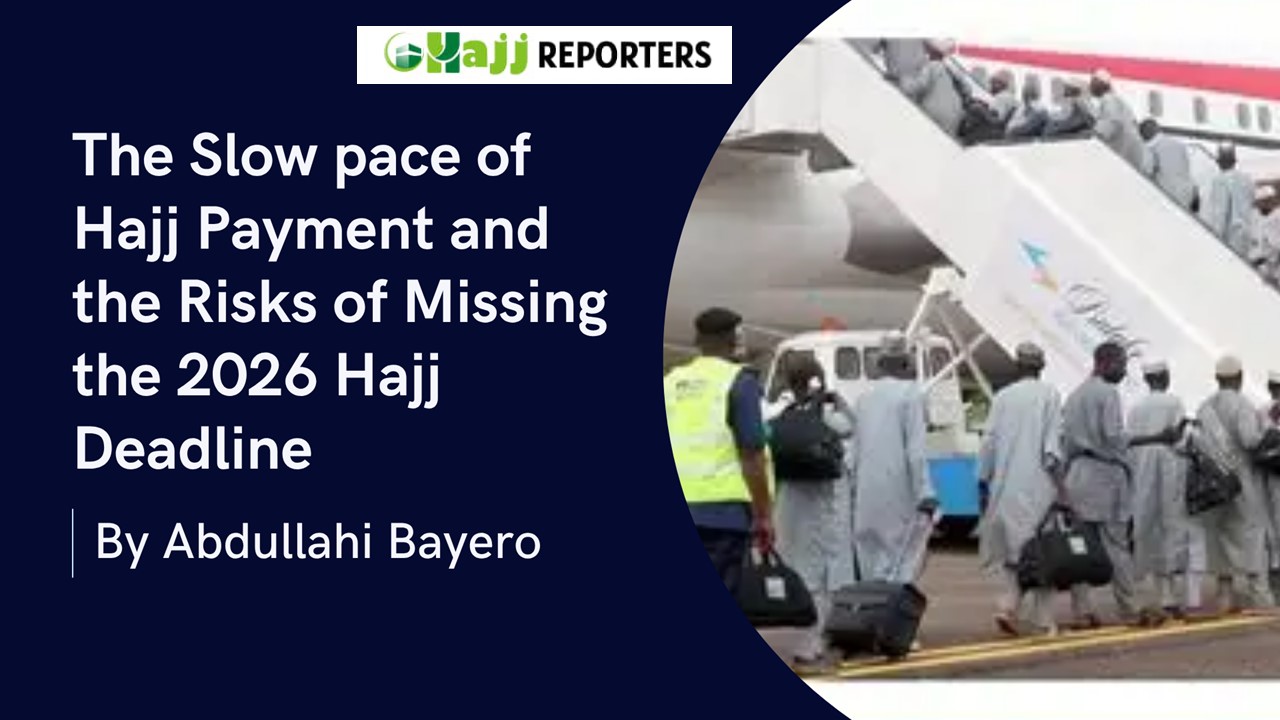
As the deadline of 29th November 2025 set by the Saudi Arabian authorities for all Hajj-related payments approaches, there is growing concern over the slow pace of deposits by intending Nigerian pilgrims. The directive, communicated through the National Hajj Commission of Nigeria (NAHCON) to all State Pilgrims Welfare Boards and Agencies, specifically targets the critical payment obligations covering the Masha’ir services: Mina, Arafat, and Muzdalifah, which form the core of the Hajj rites.
Financial Constraints and the Effect of Federal Announcement: Investigations have revealed a drastic reduction in deposits, especially the initial ₦2 million minimum deposit earlier announced by most State Pilgrims Boards. This decline followed the public announcement by the Presidency, urging NAHCON to review and possibly reduce the overall Hajj fare. Consequently, many intending pilgrims have halted further payments, waiting for the final directive or official adjustment from either NAHCON or the Office of the Vice President overseeing Hajj matters.
Operational Risks for State Pilgrims Boards: This uncertainty places the State Pilgrims Boards and Agencies in a precarious position. Most states rely heavily on pilgrims’ deposits to seal accommodation, transportation, and Masha’ir agreements with Saudi service providers. Without these funds, they cannot meet the Saudi Ministry of Hajj and Umrah’s contractual and payment obligations within the stipulated timeframe.
If this situation persists beyond the 29th November 2025 deadline, there is a real risk that Nigerian pilgrims may lose their allocations for tent spaces in Mina, Arafat, and Muzdalifah. This could not only affect the operational credibility of NAHCON and the state agencies but also jeopardize the participation of thousands of intending pilgrims in the 2026 Hajj exercise.
The Way Forward: Urgent action is therefore required from all stakeholders. The Federal Government, through the Office of the Vice President and NAHCON, must clarify the position of the proposed fare reduction to enable intending pilgrims and state agencies to proceed with certainty. Simultaneously, State Pilgrims Boards should intensify public enlightenment campaigns to encourage pilgrims to make at least the minimum ₦2 million deposit as a sign of commitment. Failure to act promptly may result in a national setback where many pilgrims miss the opportunity to perform Hajj in 2026, not due to lack of intention, but because of delayed financial decisions.
By Abdullahi Bayero
Hajj Affairs Analyst and Public Commentator.
