
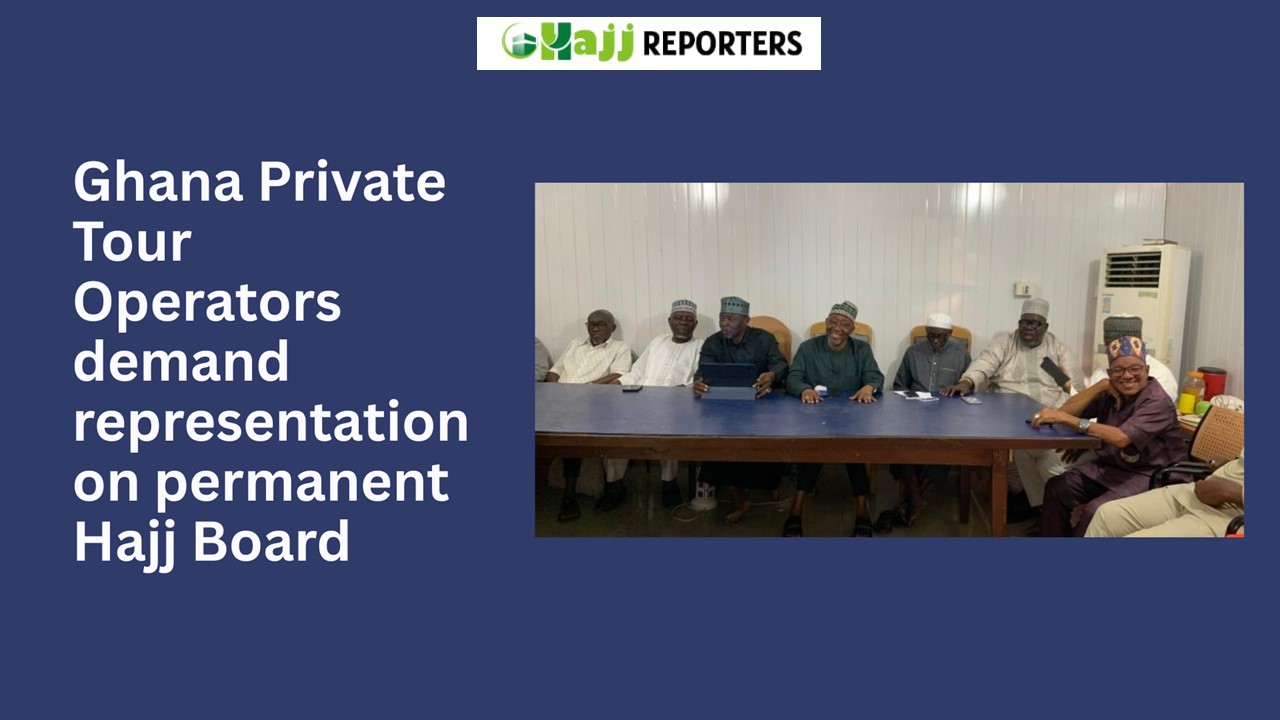
The Ghana Hajj Agents Association (GHAA) has called for representation on the permanent Hajj Board, which is expected to replace the current interim task force.
At a press conference held on Saturday, July 12, the Association reviewed the recently concluded 2025 Hajj and outlined expectations and strategic plans for Hajj 2026.
Addressing the media, a member of the Association, Imam Abass Umar Abdul Karim, emphasized the need for a stronger partnership between the Hajj Board and the agents’ association to address logistical inefficiencies and bridge communication gaps.
“The Ghana Hajj Agents Association (GHAA) are the masters of the Hajj business. We walk through loks and crownies of this country to bring passengers and we have first-hand information about Hajj clients so they should engage us more. We even want representation in the incoming board because we are the biggest stakeholder. We want a balance representation in the board so that we can speak on the poor’s behalf,” he said.
The Secretary of GHAA, Alhaji Mohammed Sadis Zakaria, also appealed to President John Dramani Mahama to prioritize competence and transparency in appointing members to the new Hajj Board.
“Ghana’s Hajj preparations need systemic reform and visionary leadership. As we await the president’s formation of a new permanent Hajj Board, we urge that it will be built on transparency, stakeholder inclusion and strategic foresight,” he said.
Proposals from GHAA to Improve the 2026 Hajj:
- Transparency in all Hajj-related contracts and expenditures.
- Early announcement of payment timelines—at least 4 to 6 months in advance.
- An increased Hajj quota, targeting 10,000 pilgrims to meet growing demand.
- Staffing based on loyalty and competence, particularly for field operations.
- Compact and centralized accommodation for Ghanaian pilgrims in Makkah.
- A review of Mina tent allocations, ensuring safety and accessibility.
- Improved logistics, sanitation, and food distribution at Arafat.
- Active consultation with stakeholders, especially GHAA, agents, medical professionals, and civil society.
The Association says these reforms are essential to ensuring that the 2026 Hajj experience is safer, better coordinated, and more dignified for Ghanaian pilgrims.
