


Soliu Oyesiji.
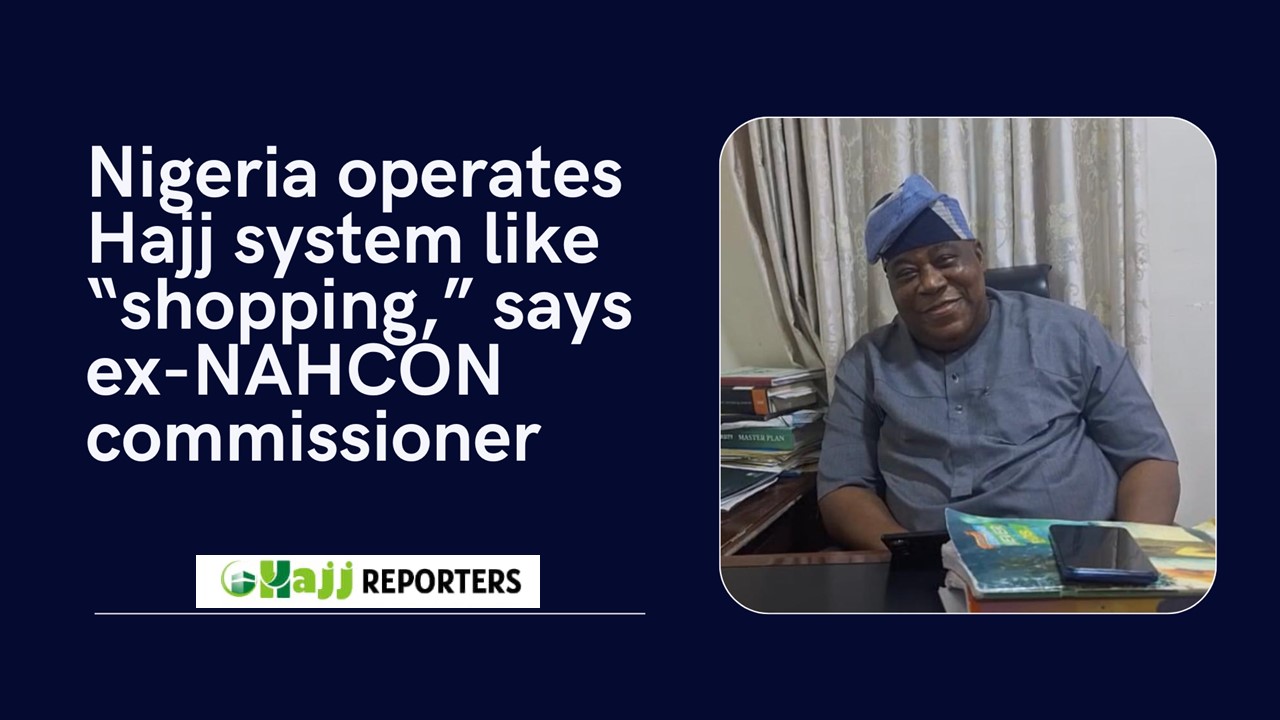
Former National Hajj Commission of Nigeria (NAHCON) commissioner, Policy, Personnel, Management and Finance, Dr Yusuf Adebayo Ibrahim, has blamed recurring challenges in Nigeria’s Hajj operations on poor planning and what he described as a “shopping-style” approach to pilgrimage management.
Speaking during an interview with Peace Magazine on #Hajj administration, Ibrahim said, “One of the factors why Hajj operations in Nigeria continue to face challenges is that we do not plan early. When you plan early, you get a good result.”
He explained that Hajj logistics require advance preparation in key areas such as #aviation, accommodation and transportation, noting that Nigeria often falls short because arrangements are made too late.
“For #Hajj, you need to plan aviation, the aircraft that will carry pilgrims, accommodation in #Madina, accommodation in Makkah and transportation between the holy cities. If you don’t plan early, you don’t get good results,” he said.
Ibrahim criticised the current system in which pilgrims pay only after allocations are announced, describing it as unsustainable.
“What we are doing in Nigeria is shopping. Like you want to buy books, you just go to the market and pay. Hajj is not done that way. Shopping will not work,” he said.
He argued that the absence of a structured Hajj savings scheme has made long-term planning difficult, adding that authorities are often given limited time to organise services once payments are made.
“Sadly, we are sometimes given only 30 days to plan because funds come late. If you don’t have enough numbers early, they cannot plan,” he noted.
Drawing from international experience, Ibrahim cited Malaysia’s Tabung Haji model as an example of effective pilgrimage management.
“In Malaysia, if you marry today, you register with Tabung Haji and start saving small money. After many years, they will inform you when it is your turn to perform Hajj. That is not shopping,” he said.
He further warned that global security concerns and stricter vetting of pilgrims have made early planning more critical.
“Today, countries want to vet pilgrims because nobody wants criminals or security risks entering their country. That is why we are facing these challenges every year in Nigeria,” he said.
Ibrahim concluded that unless Nigeria adopts a structured planning and savings framework, the recurring challenges in Hajj operations will persist.
“Until we suspend this shopping approach and introduce a proper service and savings scheme, we may not get it right,” he said.
