


By Pelumi Adesokan
Saudi Arabia is undertaking a major restructuring of the Hajj and Umrah system, with increased private-sector participation, digitalised pilgrimage services and stricter operational requirements set to change how pilgrims from countries such as Nigeria access and undertake the annual pilgrimage.
The reforms are being implemented under Saudi Arabia’s Vision 2030 and the Pilgrim Experience Programme, which seeks to transform the management of pilgrimage while expanding the country’s capacity to receive international visitors.
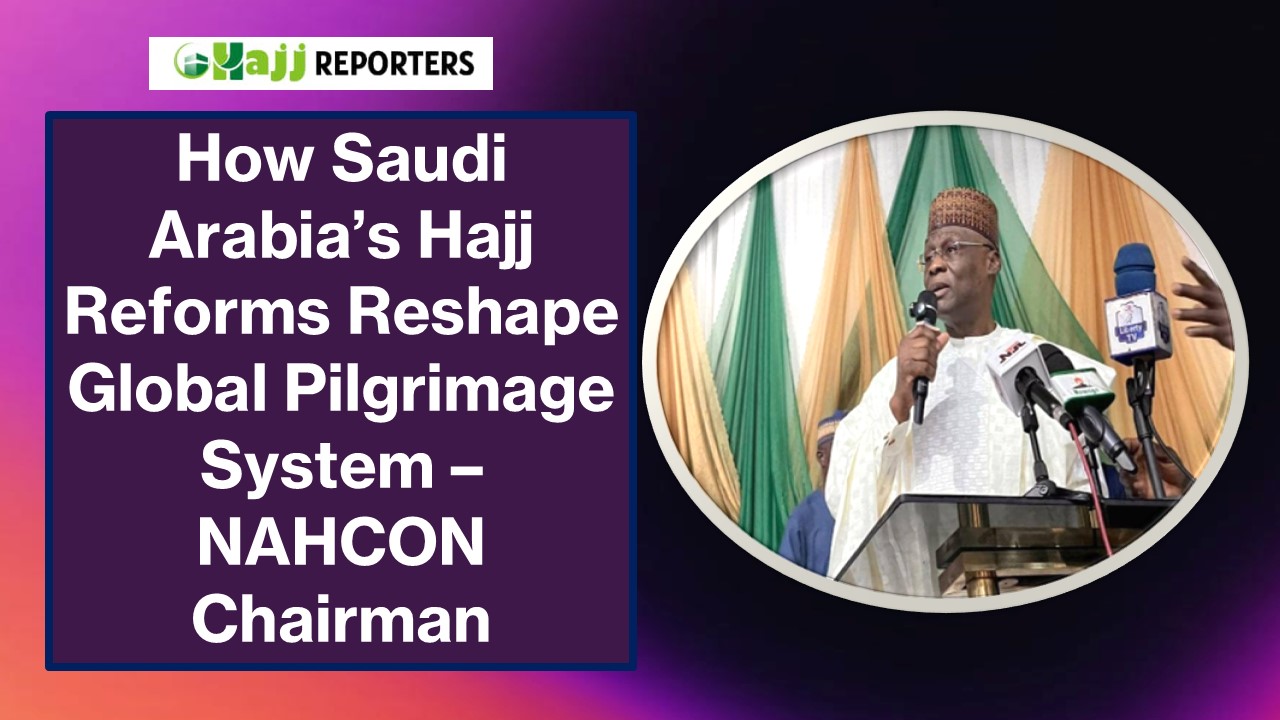
According to the Chairman of the National Hajj Commission of Nigeria (NAHCON), Ambassador Ismail Abba Yusuf, the reforms represent a shift from the traditional government-managed model towards a more commercial, digitalised and strictly regulated private-sector framework.
He said Saudi Arabia initially proposed that as much as 98 per cent of Nigeria’s traditional public Hajj quota should immediately move to the Business-to-Business (B2B) model involving private tour operators.
Under the emerging arrangement, private corporate entities would play a greater role in providing accommodation, transportation, catering and other services to pilgrims.
The proposed transition marks a significant departure from the system in which government-established pilgrim welfare agencies have traditionally coordinated pilgrimage arrangements for citizens.
Yusuf said the Saudi authorities were also restructuring Hajj packages, with pilgrims expected to choose from three premium and flexible categories.
The low-cost Package D, which had previously provided a cheaper option for pilgrims, has been discontinued under the new structure.
Mandatory services, including catering, premium transportation and accommodation, are also being incorporated into pilgrimage packages.
The reforms extend beyond commercial arrangements.
Saudi Arabia is placing greater emphasis on the training and certification of foreign Hajj officials and personnel. According to NAHCON, personnel involved in Hajj affairs are expected to undergo compulsory Saudi training as a condition for obtaining relevant operational visas and permits.
The digital transformation of the pilgrimage process is another major component of the reforms.
The Nusuk and Nusuk Masar platforms are increasingly being used to manage different aspects of the pilgrimage, including visa applications, accommodation bookings, flight confirmations, entry permits and access to services such as Rawdah.
The new system also imposes strict timelines on participating countries.
For the 2027 Hajj, countries are required to complete key stages of quota confirmation, payment, service procurement and pilgrim data uploads within prescribed deadlines.
NAHCON said the deadline for full package payments and data uploads had been fixed for September 26, 2026, with no extensions expected.
The reforms are also being driven by Saudi Arabia’s efforts to manage the capacity challenges associated with the Hajj.
According to NAHCON, Saudi Arabia has maintained a strict ceiling on Hajj quotas because of the limited capacity of key pilgrimage sites, particularly Mina and Arafat.
Nigeria’s allocation for the 2027 Hajj has therefore been capped at 50,000 pilgrims, based on the country’s previous quota utilisation and Saudi Arabia’s capacity considerations.
The restructuring is not limited to Hajj.
Saudi Arabia has also expanded opportunities for holders of certain electronic tourist and transit visas to perform Umrah, integrating pilgrimage with tourism, leisure and business activities under the broader Vision 2030 framework.
The changes mean that international pilgrims will increasingly interact with private operators and digital platforms rather than relying exclusively on traditional government pilgrimage agencies.
For countries such as Nigeria, the transition presents both administrative and financial implications.
The immediate transfer of a large proportion of the public quota to private operators could alter the way pilgrims access Hajj services, determine package prices and interact with service providers.
It also places greater responsibility on regulatory authorities to monitor private operators and ensure that pilgrims receive the services for which they have paid.
NAHCON said the new environment would require stronger regulation, licensing and compliance monitoring to prevent predatory pricing and situations where pilgrims are abandoned because of poor logistical arrangements.
The commission is also encouraging greater professionalisation among personnel involved in Hajj operations.
The reforms are expected to make early planning increasingly important for countries sending pilgrims to Saudi Arabia.
Under the new system, delays in collecting payments, uploading pilgrim information or confirming services could affect a country’s ability to meet Saudi operational deadlines.
For Nigerian pilgrims, the changes could therefore extend beyond the method of booking Hajj to the structure of the entire pilgrimage experience.
While Saudi Arabia is seeking to create a more integrated and digitally managed pilgrimage ecosystem, participating countries are expected to adapt their institutions and procedures to the new requirements.
The scale of the transformation is also linked to Saudi Arabia’s wider Vision 2030 ambition to increase the number of international visitors to the Kingdom.
According to the NAHCON chairman, Saudi Arabia is targeting up to 30 million visitors annually by 2030.
As the transition continues, national Hajj authorities, private operators and pilgrims will have to adapt to an increasingly commercial and technology-driven system.
For Nigeria, the challenge will be to ensure that the transition to the new model does not compromise access, affordability, regulation and the welfare of ordinary pilgrims.
The country’s response to the reforms is therefore expected to determine how smoothly Nigerian pilgrims adjust to the changing Hajj environment.
