
By Pelumi Adesokan
Nigeria has secured a three-year transition period for the implementation of Saudi Arabia’s new Business-to-Business (B2B) Hajj arrangement, averting an immediate shift of almost the entire country’s traditional public pilgrimage quota to private operators.
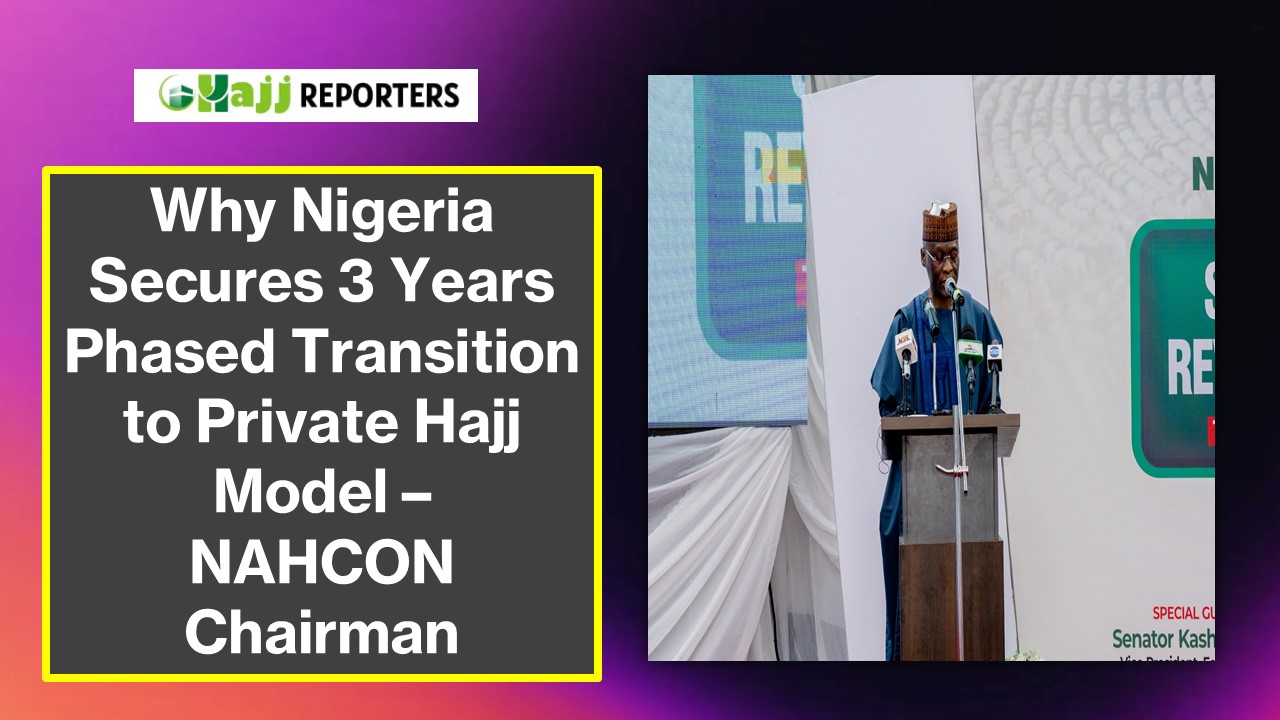
The Chairman of the National Hajj Commission of Nigeria (NAHCON), Ambassador Ismail Abba Yusuf, disclosed that Saudi Arabia approved a phased transition beginning with the migration of 30 per cent of Nigeria’s Hajj quota to the B2B model for the 2027 pilgrimage.
The development followed discussions between Nigerian authorities and Saudi officials after Saudi Arabia initially proposed that 98 per cent of Nigeria’s traditional public Hajj quota should move immediately to private corporate operators.
Nigeria had argued against an abrupt transition, expressing concerns that an immediate and large-scale privatisation could create financial pressure and make Hajj less accessible to ordinary Nigerians.
According to Yusuf, the Nigerian position was that the transition needed to be gradual to enable government institutions, private operators and pilgrims to adjust to the new system.
The compromise reached with Saudi Arabia provides for a three-year transition period.
Under the arrangement, 30 per cent of Nigeria’s 2027 Hajj quota will migrate to the B2B system, while the existing public-sector structure will continue to play a role during the transition.
The development is expected to alter the structure of Hajj administration in Nigeria as private corporate entities increasingly become involved in the provision of pilgrimage services.
NAHCON is now guiding State Pilgrims’ Welfare Boards towards establishing corporate subsidiaries that can participate in the B2B system.
The commission said the approach would allow states to participate in the emerging private-sector arrangement while retaining their public-welfare responsibilities.
The companies are expected to operate with relatively low profit margins while providing services required under the Saudi framework.
However, Nigeria was unable to secure an increase in its 2027 Hajj allocation.
NAHCON had formally petitioned the Saudi authorities for additional slots, but the request was rejected on September 15, 2026.
The country will therefore work with a 50,000-pilgrim allocation for the 2027 pilgrimage.
The commission said the allocation would now require more efficient internal planning and transparent distribution.
The quota limitation is also tied to Saudi Arabia’s management of capacity at the major pilgrimage sites, particularly Mina and Arafat.
With the transition to the B2B model and the unchanged quota, Nigerian authorities are now under pressure to ensure that the country’s Hajj administration complies with Saudi requirements within the stipulated timelines.
One of the immediate priorities is the digitisation of Nigeria’s Hajj operations.
NAHCON is developing integrated digital systems capable of receiving and transmitting pilgrim information required under the Saudi platforms.
The commission said this was necessary to enable Nigeria to meet the September 26, 2026 deadline for the completion of critical data and payment requirements for the 2027 pilgrimage.
The new system is expected to require closer coordination between NAHCON, State Pilgrims’ Welfare Boards, private operators and other stakeholders.
NAHCON has also commenced sensitisation activities across the country to prepare stakeholders for the changes.
The commission said the workshops were aimed at educating fare collectors, state officials and prospective pilgrims about the new financial requirements, timelines and operational procedures.
The transition is also expected to bring increased scrutiny of private Hajj operators.
With more services moving into the hands of private companies, NAHCON said licensing, compliance monitoring and audits would be strengthened.
The objective, according to the commission, is to prevent situations in which pilgrims are exposed to excessive charges, poor service delivery or logistical abandonment.
The regulatory challenge is particularly significant because the new B2B system will give private operators a greater role in determining the services available to pilgrims.
NAHCON said operators would therefore be expected to comply with both Nigerian regulatory requirements and Saudi operational standards.
The commission is also prioritising early procurement of Hajj services and improved workforce training.
The new Saudi system requires countries to complete key stages of Hajj planning within fixed timelines, leaving less room for delays in negotiations, payments and data submission.
For Nigeria, the three-year transition provides time for institutions and operators to build the capacity needed to function under the new system.
However, the country will still have to manage the immediate demands of the 2027 pilgrimage under the revised rules.
The NAHCON chairman said Nigeria’s response was based on what he described as pragmatic diplomacy, balancing compliance with Saudi regulations with the need to protect the interests of Nigerian pilgrims.
The Federal Government has also endorsed compliance with the new Saudi requirements, reflecting Nigeria’s desire to maintain a cooperative relationship with the Kingdom and remain compliant with the rules governing international pilgrimage operations.
As the 2027 Hajj approaches, the major task for Nigeria will be implementing the phased B2B transition without undermining the welfare function traditionally performed by government pilgrimage institutions.
The country must also ensure that private operators participating in the new system are adequately regulated and that pilgrims understand the changing arrangements before making financial commitments.
With the 50,000 quota retained and the first 30 per cent of the allocation moving into the B2B framework, the 2027 Hajj will effectively become the first major test of Nigeria’s transition to the new Saudi pilgrimage system.
