


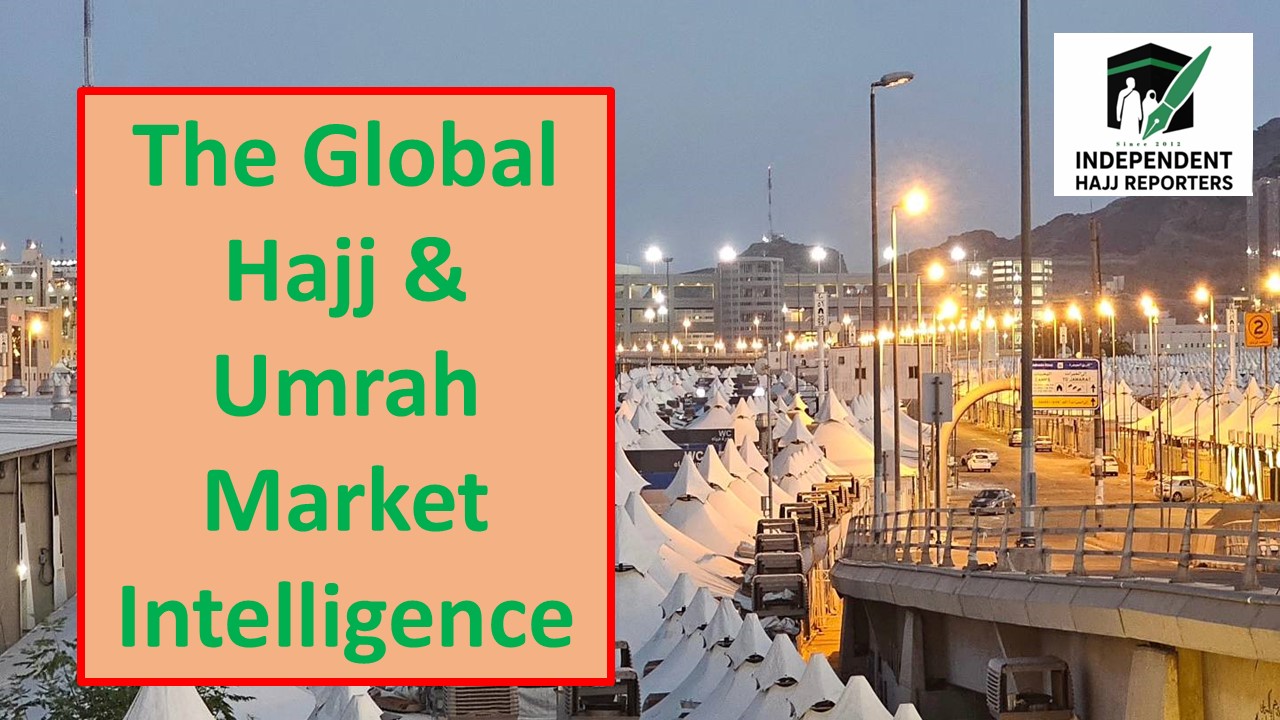
A comprehensive strategic overview of the global Hajj and Umrah market — covering demographics, country quotas, institutional mechanisms, pricing, digital transformation, and safety. Data for the 2024–2025 season and projections through 2030.
Demand Far Exceeds Supply
Hajj remains a strictly quota-limited product. In some Indonesian provinces, the waiting list for Hajj reaches 40 years. Umrah has become a mass year-round product accessible to most income levels globally.
Gender Liberalisation
Women now represent 47.7% of Hajj pilgrims — a direct result of the abolition of the mandatory male guardian (mahram) requirement for many visa categories across India (LWM programme), Pakistan, and others.
Digital Revolution via Nusuk
The Nusuk platform has unified visa issuance, accommodation booking and ritual planning. With 30 million users from 190 countries, it is transforming how individuals — not just agencies — access pilgrimage services.
State Subsidies as Market Anchor
Countries like Indonesia and Malaysia use sovereign Hajj funds (BPKH, Tabung Haji) to absorb market volatility. In Malaysia, low-income pilgrims (B40) pay only ~MYR 15,000 versus MYR 33,300 full price.
Asia-Pacific Dominance
Four countries — Indonesia, Pakistan, India and Bangladesh — account for nearly half of all international Hajj pilgrims. The Asia-Pacific region hosts 60% of the world’s Muslims and drives the majority of pilgrimage demand.
Visa Policy Revolution
Saudi Arabia abolished the dedicated Umrah visa requirement for many nationalities. Any valid Saudi visa — tourist, business or transit — now permits Umrah, enabling individual pilgrims to bypass traditional agencies entirely.
Key Pilgrimage Pricing Factors
Distance to Al-Haram
The single most important pricing variable. Moving from 2.5 km to 250 m from Masjid al-Haram adds approximately $3,000 per person to the package cost.
Transport Logistics
Direct flights command a premium over connecting routes. The Haramain railway reduced Makkah–Madinah transfer time but adds cost to standard packages.
State Subsidies
Countries with sovereign Hajj funds (Indonesia BPKH, Malaysia Tabung Haji) buffer against market price shocks, keeping pilgrimage accessible for lower-income citizens.
Ramadan Premium
Peak season pricing: standard packages in January may cost $2,168 vs $2,295+ during Ramadan. Hotel rates in Makkah surge dramatically in this sacred month.
Currency Risk
Turkish operators price in USD to hedge lira inflation. Pakistani pilgrims face $1M+ rupee costs due to currency devaluation — despite relatively low USD package prices.
