
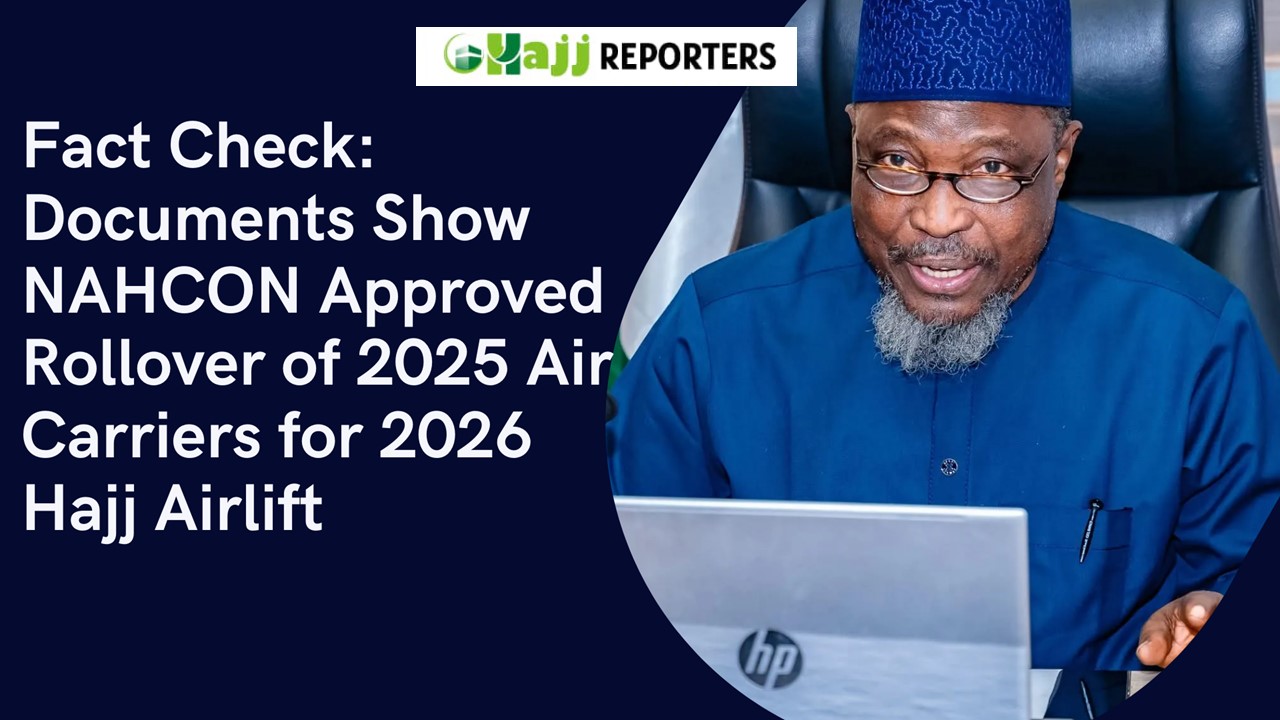
Contrary to recent claims by the National Hajj Commission of Nigeria (NAHCON) that it did not apply any rollover policy in engaging service providers for the 2026 Hajj, official documents indicate that the commission approved the retention of 2025 air carriers for the 2026 Hajj airlift.
A notification letter addressed to Air carriers dated 24th September 2025 titled “Rollover of 2025 Approved Air Carriers for the 2026 Hajj Airlift” stated that NAHCON “has decided to retain the air carriers previously approved for the 2025 Hajj exercise for participation in the 2026 Hajj operations.”
According to the document, the decision was taken to “save valuable time and enable prompt planning for critical preparatory activities,” including early allocation of flight slots and coordination with relevant stakeholders. Though, the document didn’t specifically mention issue of numbers of passenger’s allocations and other details of the rollover policy.
The notification, signed by Assistant Director of Aviation, Habeeb Bello, noted that the retained carriers were still required to pay applicable application and licensing fees, submit updated documents for verification, and undergo final regulatory and operational clearance before final approval.
“This rollover decision is aimed at saving valuable time and enabling prompt planning for critical preparatory activities,” the document said.
Additionally, NAHCON, in a video circulated on social media, explained that the decision to retain the 2025 carriers was designed to meet Saudi Arabia’s tight Hajj timelines, while still subjecting the airlines to regulatory scrutiny and obtaining fresh clearances.
It said the process was intended to ensure operational efficiency and avoid disruptions to Hajj preparations, stressing that compliance, performance reviews, and regulatory approvals remained mandatory.
The clarification comes amid NAHCON’s earlier insistence that it did not seek a formal “rollover approval” from the Bureau of Public Procurement, but rather acted within emergency procurement provisions allowed under existing laws.
Observers say the document and subsequent clarification highlight the need for clearer communication from the commission to avoid confusion among stakeholders and the public over procurement decisions relating to Hajj operations.
NAHCON has maintained that its actions were guided by transparency, operational necessity, and the welfare of Nigerian pilgrims.
