


By Ibrahim Muhammad
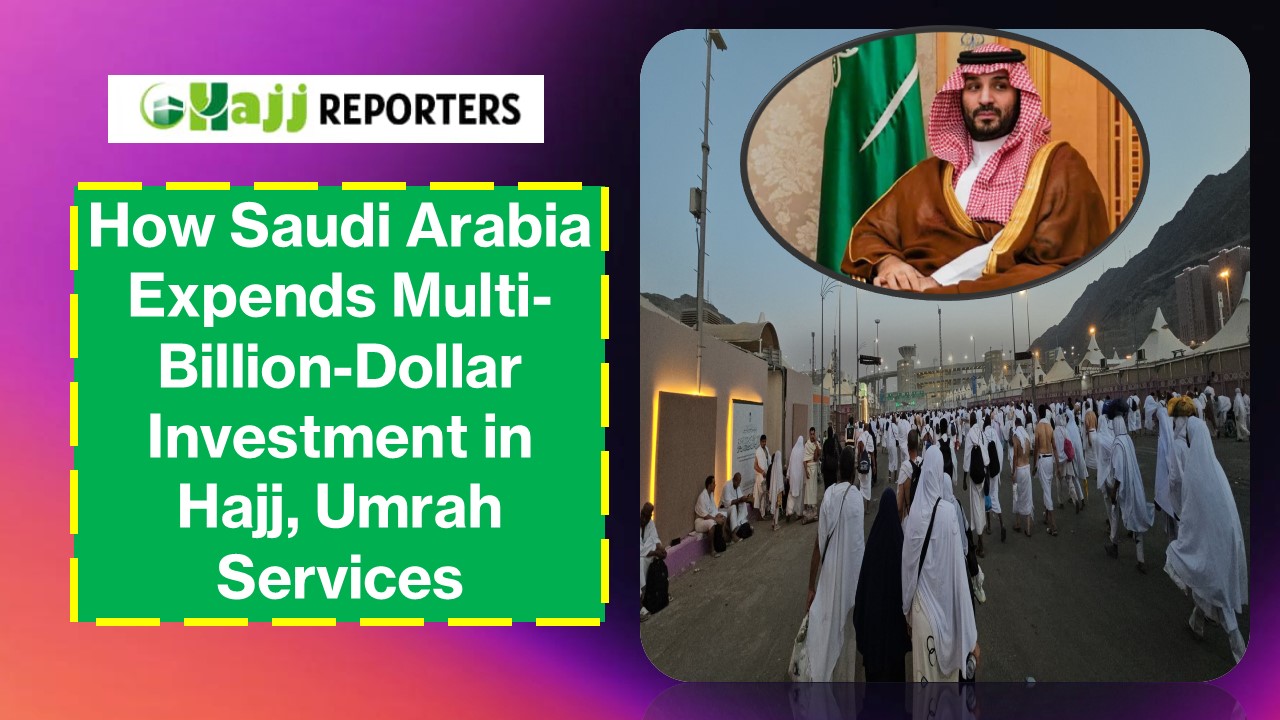
Saudi Arabia is committing enormous resources to expanding religious infrastructure, transport networks, accommodation and digital services to improve the experience of millions of Muslims performing Hajj and Umrah annually.
The investments form part of the Kingdom’s Vision 2030 strategy, which seeks to increase the number of pilgrims and international visitors while diversifying the economy beyond oil.
A major investment figure cited by Saudi authorities is SR1.6 trillion (about $427 billion) over a 10-year period for transport, tourism and related infrastructure, including facilities serving pilgrims. The scale of the commitment reflects the growing importance of Hajj and Umrah to Saudi Arabia’s religious responsibilities and economic ambitions.
One of the most significant areas of investment is the expansion of the Grand Mosque in Makkah and the Prophet’s Mosque in Madinah. The projects are designed to accommodate more worshippers, improve movement around the holy sites and provide facilities for the growing number of visitors.
The expansion of the Grand Mosque has included improvements to the Mataf, the area where pilgrims perform Tawaf around the Kaaba, alongside cooling systems and other infrastructure intended to make worship more comfortable, particularly during periods of intense heat.
Transportation is another major component of the investment. The Haramain High-Speed Railway connects Makkah, Jeddah and Madinah, offering pilgrims an alternative to road travel between the holy cities. Within Makkah, the Al Mashaer Metro and a large fleet of buses support the movement of pilgrims between Mina, Arafat and Muzdalifah during Hajj.
Saudi Arabia has also invested in accommodation, including hotels and other hospitality facilities, to meet rising demand. Developments in Makkah and Madinah are expected to increase lodging capacity and support the Kingdom’s ambition to welcome more international visitors.
Technology has become increasingly important in Hajj administration. Digital platforms such as Nusuk support aspects of pilgrimage planning and service delivery, while smart cards, digital records and crowd-management systems are being used to improve coordination, safety and access to services.
Airport infrastructure also plays a critical role in receiving pilgrims from across the world. Facilities at King Abdulaziz International Airport in Jeddah, alongside other transport upgrades, help manage the seasonal influx of international travellers arriving for Hajj and Umrah.
Beyond physical infrastructure, Saudi Arabia operates programmes to host selected pilgrims from different countries, including through the Custodian of the Two Holy Mosques’ Guests Programme. Such initiatives form part of the Kingdom’s wider efforts to facilitate pilgrimage and strengthen international religious ties.
The investments serve both religious and economic objectives. Saudi authorities have repeatedly emphasised their responsibility to provide pilgrims with safe, comfortable and orderly services. At the same time, increasing Hajj and Umrah capacity supports hospitality, aviation, transport, retail and other sectors under Vision 2030.
As the number of pilgrims grows, the challenge will be to ensure that infrastructure expansion translates into better services, effective crowd management, affordable accommodation and improved safety throughout the pilgrimage journey.
BREAKDOWN THE BIG FIGURE
SR 1.6 Trillion = $427 Billion USD
Announced by Minister of Transport Saleh Al-Jasser at Saudi-EU Forum — to be invested over next 10 years (2023-2033) in partnership with private sector, for tourism and Hajj/Umrah sector.
Earlier phase: $50 Billion USD already invested in 2016-2020 just to expand Haram and transport.
WHERE THE BILLIONS GO — 7 Mega Projects
- Expansion of Masjid al-Haram & Masjid Nabawi
– Haram capacity from 1.5M to 3M worshippers at a time
– Mataf (Tawaf area) expansion to hold 150,000 Tawaf per hour
– King Abdullah expansion — cost alone SR 100 Billion
– New cooling plant — world’s largest — for Haram
- Haramain High-Speed Railway
– Cost: SR 60 Billion ($16B)
– Makkah — Jeddah — Madinah in 2 hours, 300km/h
– Moves 60M passengers yearly, reduces 20,000 buses during Hajj
– Pilgrim no longer needs to suffer 6-hour bus.
- Masha’ir Transport — Mina, Arafat, Muzdalifah
– Al Mashaer Metro (Makkah Metro) — SR 6.7 Billion, 18 trains, moves 72,000 pilgrims/hour
– 20,000 air-conditioned buses, smart tracking
– Tents in Mina now fireproof, air-conditioned, 2.5M capacity — cost SR 5 Billion
- Hotels & Accommodation
– Makkah now has 268,000+ licensed hotel rooms
– Madinah: 42,000 more rooms coming via Rua Al Madinah — SR 24 Billion ($6.4B) investment
– Total Kingdom: 426,000+ licensed hotel rooms now
- Digital Hajj — Nusuk Ecosystem
– Nusuk app, Nusuk Smart Card with pilgrim health, location, residency data
– AI crowd monitoring, heat sensors, drones for safety
– Contactless payments, real-time tracking 6964
- Airports & Ports
– King Abdulaziz Jeddah Airport new Hajj Terminal — world’s 4th largest — SR 36 Billion, handles 30M pilgrims
– 2 new aviation centres + connection to 250 global destinations
- Guest of Custodian Program
– Since 1996, hosted 65,000 pilgrims from 140 countries fully free
– In 2025 alone — 1,300 from 100 countries + 1,000 Palestinians free Hajj
WHY SAUDI IS DOING THIS?
Not for profit
- Religious duty: King Salman says — “Serve pilgrims with utmost comfort, tranquility and ease” — 85% pilgrim satisfaction target measured every year
Bottom line: When you pay N8M for Hajj, you are using infrastructure that cost Saudi over 1.6 trillion Riyal to build. That small ihram towel you wear walks on billion-riyal marble, air-conditioned floor, under $50B worth of shade and trains.
That’s why Prophet ﷺ said: Hajj brings poverty removal — because Allah made a whole nation invest billions to serve you.
