


- Fewer visitors in Mecca for Umrah
- ‘No way’ of succeeding without peace
- Questions over Ramadan and Hajj 2027
Images of a deadly missile attack on Riyadh airport have made the threat of war a visible reality in Saudi Arabia, raising concerns for the millions of Muslim pilgrims who travel there each year.
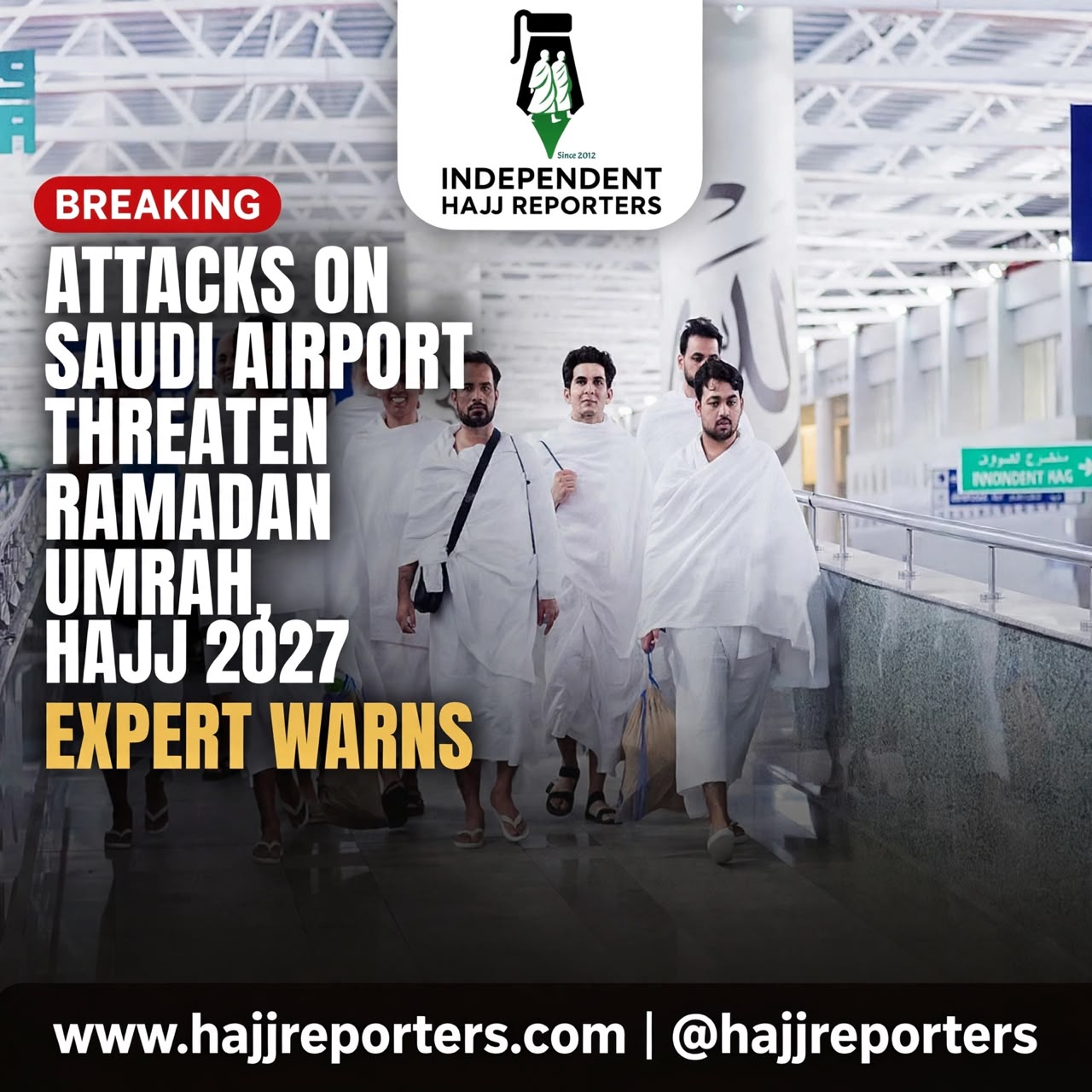
\Security footage from the terminal showed passengers, many of whom were pilgrims identifiable from their ihram clothing – the unadorned white cloth worn by those travelling to Mecca.
Moments later, a flash lit up the building before smoke and debris filled the air, sending passengers scrambling for safety. More than a dozen people were killed and hundreds injured in the Houthi strike last month.
Those images and the continuing Houthi attacks are likely to deter pilgrims into next year, industry experts have told AGBI.
Foreign religious tourism remained strong following the outbreak of the Iran war even as business and leisure travel plummeted around the Gulf, but explicit Houthi threats towards airports may already have led to a drop in hotel bookings in Mecca and Medina.
For hoteliers and tour operators, the greater risk is that disruptions persist into the Ramadan month of fasting in February-March and Hajj, the annual pilgrimage to Mecca that draws millions of worshippers and next takes place in May 2027.
“If the Houthi and Iran issue is not settled, I don’t see that they will get anywhere close to the number they achieved this year,” said Turab Saleem, CEO of Perfetti Hospitality, a consultancy in the UAE. “No way.”
Tour operators said the number of Hajj pilgrims recorded in 2026 reflects the huge demand among the world’s 2 billion Muslims to carry out the religious obligation.
“Religious travel continued to boom” this year, said Muzzammil Ahussain, chief executive of Saudi tour operator Almosafer.
Visitor numbers took an initial knock following the cancellation of flights across the GCC, “but as flights came back, so did the people”, he said.
Unlike Iran, however, the Yemeni Houthis have said explicitly that they intend to target civilian airports in Saudi Arabia. At least 23 people have been killed in Houthi attacks on airports across the country, including the Riyadh strike.
Lower hotel occupancy
There are already signs of a decline in the number of pilgrims performing Umrah, the pilgrimage to Mecca that can be undertaken at any time in the year.
Official statistics have not yet been released, but financial disclosures from a number of Mecca-based hoteliers report a drop in revenue in the third quarter “resulting from lower occupancy rates due to the geopolitical situation in the region”, according to one hotel owner.
“I was in Mecca two weeks back,” said Saleem. “I’ve been visiting for 30 years and I have never seen the Haram that empty.”
The Great Mosque, often referred to as the Haram, is the centre of Hajj and Umrah pilgrimages. It houses the Kaaba, the focal point of Islam towards which all prayers are directed.
The peak season for hotels comes with the Hajj pilgrimage. A second peak comes during Ramadan. Hotel operators will be watching nervously to see if air traffic returns before those dates.
While airports in Medina and Jeddah that serve pilgrims remain open, many international airlines refuse to fly. A number of Western embassies have issued travel warnings to their citizens and visitor numbers from those countries have plummeted, Saleem said.
The Houthis claimed an attack on Riyadh airport as recently as Thursday, although this has not been confirmed by the Saudi authorities.
The Yemeni militia group has said it will not target Mecca and Medina, although the Saudi government claims to have intercepted drone attacks in the vicinity of the holy cities.
For international tourists, even the suggestion of an attack could cause a dramatic decrease in visits, according to Saleem.
“It is just enough to create disturbance and fear,” he said. “Tourism is all about safety and security. The minute you create doubt, that’s enough.”
Source: agbi.com
