


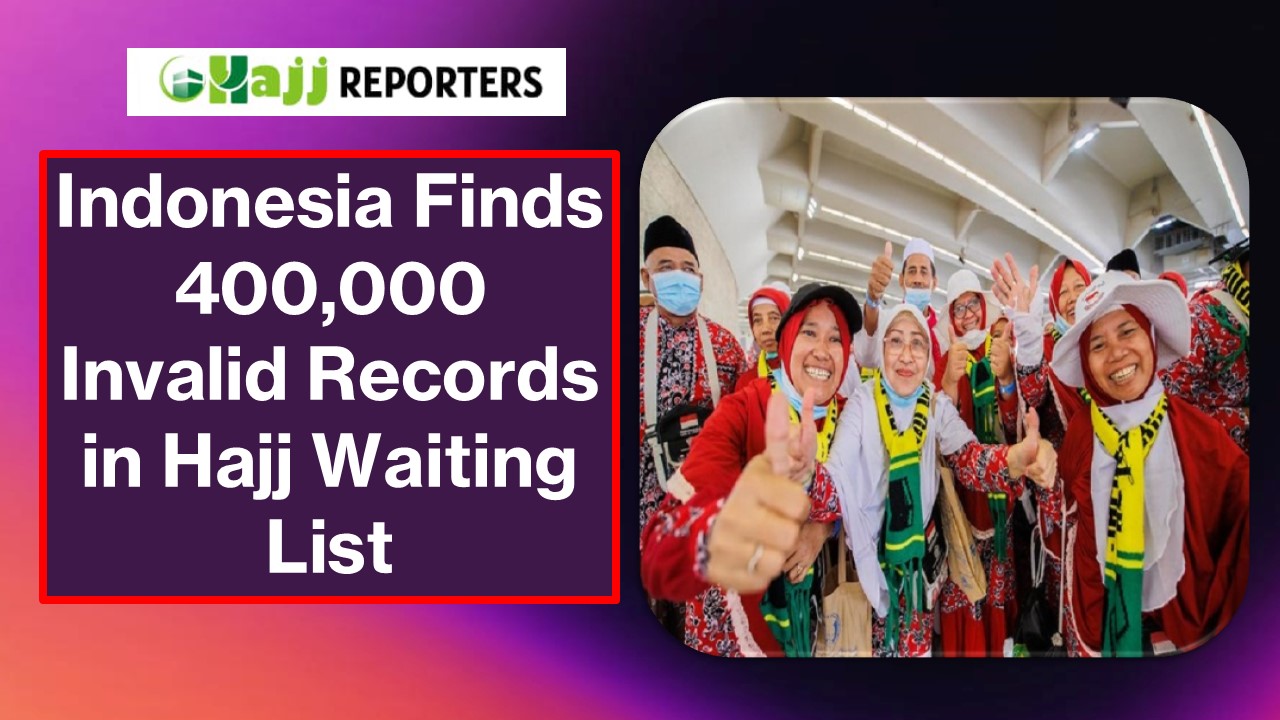
The Indonesian Ministry of Hajj and Umrah (Kemenhaj) has revealed the existence of hundreds of thousands of invalid data entries within the national Hajj waiting list. This finding has the potential to significantly reduce the average factual waiting period for Hajj to approximately 14-15 years.
The Deputy Minister of Hajj and Umrah, Dahnil Anzar Simanjuntak, stated that the discovery was made during a data rectification process for pilgrims. Out of approximately 5.7 million entries in the Hajj queue, around 400,000 were deemed invalid.
“We are currently rectifying the data. We found invalid data within those 5.7 million queue entries; there are about 400,000 that are invalid,” Dahnil said following a prayer and dhikr event at the Ministry’s office in Jakarta on Monday (14/9/2026).
He noted that these invalid records impact the calculation of the Hajj waiting period. Consequently, the Ministry is conducting more detailed data collection and verification to determine the true number of pilgrims remaining in the queue.
Dahnil mentioned that prior to the formation of the Ministry of Hajj and Umrah, the national waiting period was reported to be as long as 49 years. Following data improvements and various transformations, the administrative waiting period currently stands at approximately 26 years.
“We are working on one of the issues frequently raised by the public: whether the Hajj queue can be shortened. We noted it was 49 years before the Ministry of Hajj existed, and now, following the Minister’s orders based on Presidential instructions, we are shortening it. We have improved the data, and the average is now 26 years,” he said.
However, Dahnil emphasised that the 26-year figure is still based on administrative data. Once the validation and data updating process is complete, the factual waiting period is expected to be much shorter.
“Factually, for those in the queue, following the President’s instructions, the period could be shorter, averaging around 14-15 years,” he added.
Dahnil further stated that efforts to shorten the waiting period will not stop at data rectification. The Ministry will also push for improvements in the management of Hajj administration and finances to ensure the rights of both current and prospective pilgrims are protected.
He stressed that the protection and service of pilgrims are the primary orientations of the transformations being undertaken by the Ministry. The government aims to ensure pilgrims receive high-quality service while having their rights protected.
“In principle, all improvements and transformation efforts undertaken by the Minister and us at the Ministry of Hajj culminate in our primary effort to ensure that the rights of pilgrims are protected,” Dahnil explained.
Dahnil emphasised that government attention is also directed towards prospective pilgrims still awaiting departure. One issue requiring rectification is the management of Hajj finances during the waiting period.
“Our orientation is first, the rights of Hajj and Umrah pilgrims, and second, the rights of prospective pilgrims. The goal is to ensure they are well-served and, secondly, well-protected,” he said.
Therefore, he expressed hope that the revision of the Hajj Finance Law would provide space for the government to continue various efforts to shorten the Hajj waiting period.
Dahnil noted that the improvement of Hajj financial management must be conducted transparently and accountably. This ensures that pilgrims receive accurate and open information regarding the funds they hold while waiting for departure.
“Our challenge moving forward is ensuring that Hajj financial management is transparent and accountable, so that pilgrims receive correct and open information regarding the money they keep in the bank while waiting in the queue,” Dahnil concluded.
SOURCE: JAKARTA GLOBE
