


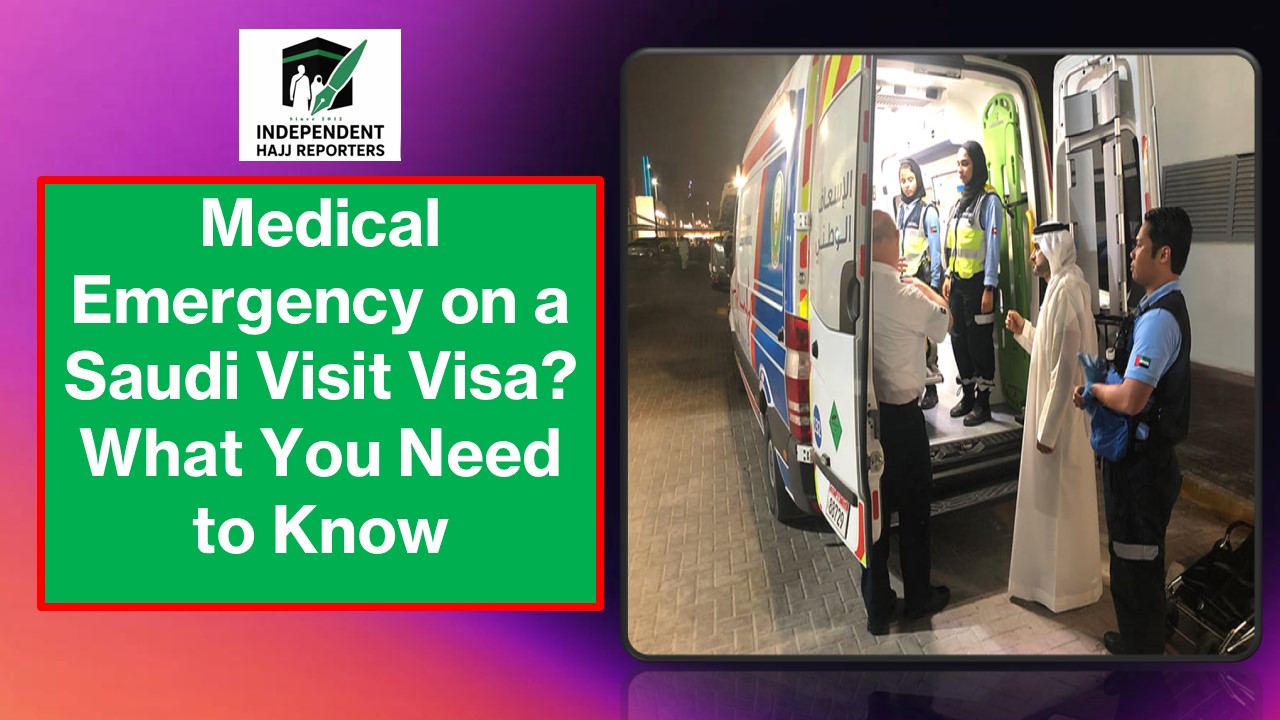
When family members visit Saudi Arabia, unexpected medical emergencies can cause serious financial and emotional stress. Understanding how visit visa medical insurance works can help families know what to do when urgent medical treatment is needed.
Health insurance is required for visitors entering Saudi Arabia on a visit visa. Visitors can also check the status and validity of their visit visa insurance online using their passport details.
Here is what expatriates need to know about visit visa medical coverage, emergency procedures, and handling insurance problems.
What Visit Visa Insurance Covers
Saudi visit visa insurance is primarily designed to cover medical emergencies rather than routine healthcare.
- Coverage Limit: The visitor insurance policy covers emergency cases up to a maximum benefit of SAR 100,000, subject to the terms and conditions of the policy.
- Emergency Treatment: The policy is intended for sudden medical emergencies requiring urgent treatment.
- Emergency Dental Treatment: Emergency dental treatment is covered up to SAR 500 during the policy period.
- Emergency Pregnancy and Delivery: Emergency pregnancy and childbirth expenses are covered up to SAR 5,000 during the policy period.
- Emergency Dialysis: Emergency dialysis is also covered up to the maximum benefit applicable under the visitor insurance policy.
The exact coverage depends on the terms, conditions and limits of the visitor’s individual insurance policy.
If you are unsure about an existing policy, you can check the health insurance validity online.
Check the Insurance Before an Emergency
It is better to check a family member’s insurance details before an emergency occurs.
The Saudi Insurance Authority provides an online Visit Visa Travel Insurance Inquiry service. Visitors can use the service to verify the validity and details of their visit visa insurance using the passport information associated with the visa.
Save the insurance details and insurer information on your phone so they are easily available if the visitor suddenly requires medical treatment.
Declaring Pre-existing Conditions
Visitors should provide accurate information about existing medical conditions when such information is requested during the insurance process.
Advertisement
This can be particularly important for visitors with chronic illnesses or other serious medical conditions.
The Saudi Insurance Authority advises that medical conditions should be accurately disclosed for proper pricing and to ensure that the required healthcare services can be provided according to the policy benefits.
Families bringing elderly parents or relatives with existing health conditions should therefore check the insurance terms carefully and understand what is and is not covered before travelling.
What to Do in a Medical Emergency
In a serious medical emergency, take the following steps:
- Call an Ambulance: Dial 997 for Saudi Red Crescent ambulance assistance.
- Inform the Hospital: Tell the hospital that the patient is in Saudi Arabia on a visit visa and has visitor medical insurance.
- Provide the Required Details: Keep the visitor’s passport, visit visa and insurance information available.
- Keep Medical Records: Save hospital reports, prescriptions, insurance approvals or rejection messages, invoices and receipts related to the treatment.
Getting appropriate medical assistance should always be the priority in a serious emergency.
What If the Insurance Claim Is Rejected?
An insurance company may reject a claim if it considers the treatment outside the policy’s coverage or for another reason.
If this happens, first ask the hospital or insurance company for the reason for the rejection.
Contact the insurance company and request clarification. Keep any claim or complaint reference numbers and copies of communications related to the case.
If the issue cannot be resolved with the insurance company, you can submit a complaint to the Saudi Insurance Authority.
How to File an Insurance Complaint
The Saudi Insurance Authority allows insured persons and other parties involved in an insurance relationship to submit complaints electronically.
To submit a complaint:
- Access the Insurance Authority’s complaint service.
- Log in through Nafath or create an account.
- Enter the insurance and complaint details.
- Mention whether you have already complained to the insurance company and provide the previous complaint reference number, if available.
- Upload relevant supporting documents based on the nature of the complaint.
- Review the information and submit the complaint.
The complaint service is available to Saudi citizens, residents and foreigners.
The Insurance Authority can also be contacted on its toll-free number 800 124 0551.
If You Have Already Paid the Hospital
If you have paid medical expenses yourself, keep all invoices, receipts, medical reports and discharge documents.
Contact the insurance company to determine whether the expenses are eligible for reimbursement under the visitor’s policy.
Advertisement
If there is a dispute over whether the treatment should be covered, you can submit a complaint through the Insurance Authority with the relevant supporting documents.
Reimbursement depends on the circumstances of the case and the terms and conditions of the insurance policy.
Documents You Should Keep
During a medical emergency, keep copies of all important documents, including:
- Visitor’s passport
- Visit visa
- Insurance policy details
- Hospital admission and discharge reports
- Medical reports and prescriptions
- Insurance approval or rejection messages
- Hospital invoices and payment receipts
- Claim or complaint reference numbers
- Ambulance or emergency records, if applicable
These documents can be important when dealing with the hospital, insurance company or Insurance Authority.
Be Prepared When Parents Visit Saudi Arabia
Many expatriates bring their parents to Saudi Arabia on family visit visas. Older visitors may already have diabetes, heart conditions, kidney problems or other chronic illnesses.
Before they travel, check their visit visa insurance and understand its coverage and limitations.
It is also useful to carry important medical reports, prescriptions and a list of medicines regularly taken by the visitor.
Do not assume that every treatment related to an existing medical condition will automatically be covered by visit visa insurance.
A Little Preparation Can Help During an Emergency
Medical emergencies can happen without warning. Checking your family member’s insurance before they travel—or soon after they arrive—can save valuable time if something goes wrong.
Keep the visitor’s insurance details easily accessible, understand the important coverage limits and know how to contact the insurer.
If an insurance dispute cannot be resolved directly with the company, the Saudi Insurance Authority provides an official online complaint service.
Note: Insurance coverage depends on the individual policy, the medical condition, and the applicable terms and limits. Always check the visitor’s insurance policy for exact coverage.
Source: KSA Expat
