
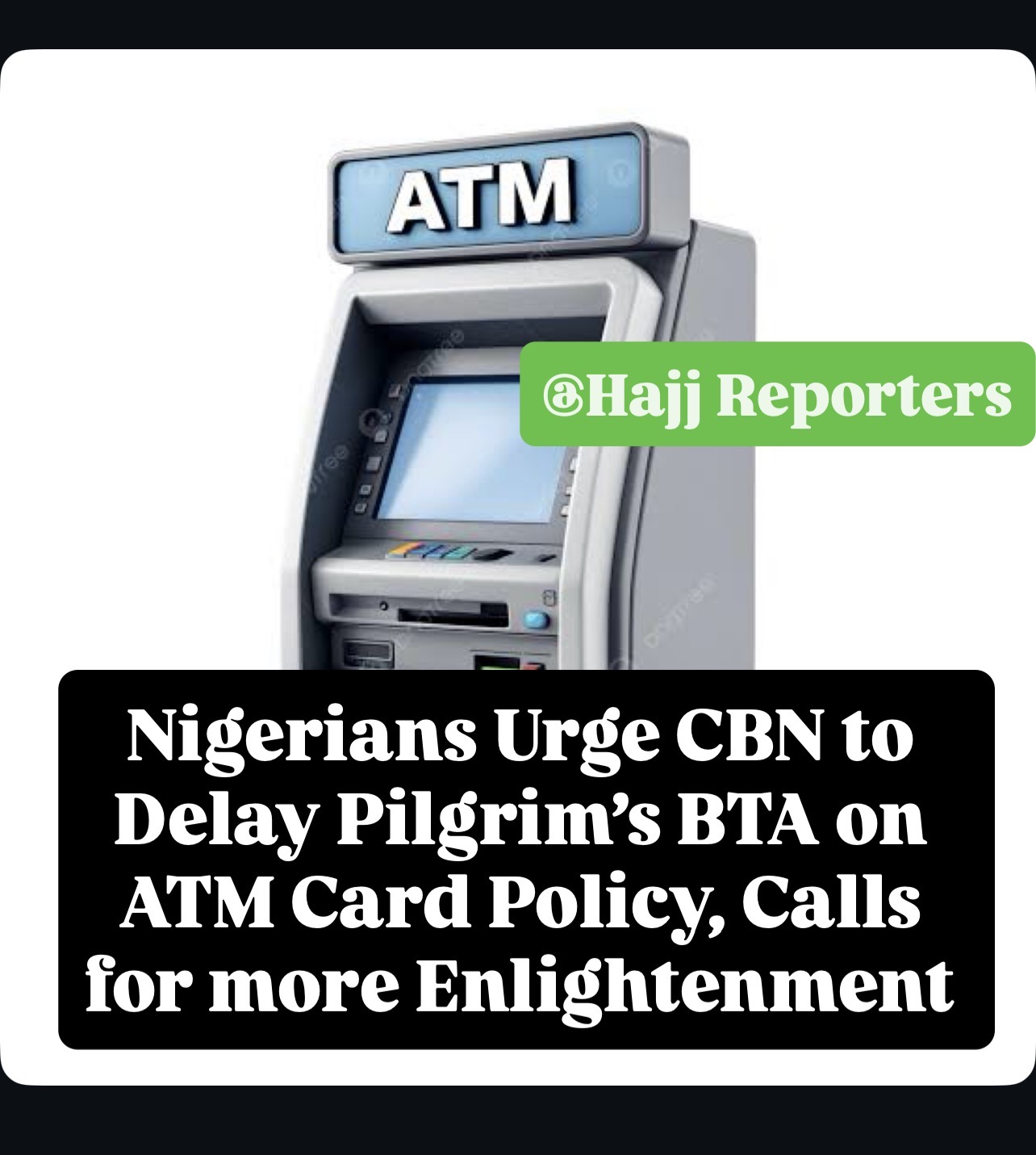
Nigerians have urged the Central Bank of Nigeria (CBN) to delay the proposed issuance of Basic Travel Allowance (BTA) to Hajj pilgrims through ATM cards, citing concerns over card usage failures and the difficulties pilgrims may face in accessing their funds in Saudi Arabia.
The policy, expected to commence this year, would mark a major departure from the traditional system of disbursing BTA in cash to Nigerian pilgrims.
However, findings from an online survey conducted by Hajj Reporters showed mixed reactions, with a majority of respondents favouring the existing cash system, while others supported the card-based model, arguing that Nigeria should embrace digital payment systems.
One respondent, Abdulwahab Hafis, supported the proposed policy, saying it would reduce the pressure associated with carrying cash and limit the risk of pilgrims losing their funds.
But a travel agent, Ibrahim Abubakar, raised concerns over previous experiences with BTA cards issued to pilgrims.
According to him, some pilgrims who received BTA cards were unable to use them in Saudi Arabia because the cards had not been activated. He said attempts to resolve the problem through calls and emails to the issuing banks were unsuccessful, as the affected pilgrims were sometimes asked to visit a bank branch in Nigeria.
Abubakar said such incidents left some pilgrims without access to their funds until they returned to Nigeria, defeating the purpose of the BTA arrangement. He also complained that some pilgrims were not refunded all the charges associated with the issuance of the cards.
He, however, acknowledged that the cash-based system also has weaknesses, alleging that some beneficiaries divert BTA dollars to the black market instead of using them for their intended purpose.
Another respondent, Haruna Musa Gawain, warned that the card system could create serious difficulties, particularly for rural pilgrims who may have limited knowledge of ATM transactions.
He also pointed to the limited availability of ATMs around areas where Nigerian pilgrims are accommodated, including Misfalah and Shara Mansur in Makkah.
Gawain suggested that if the card system is introduced, state pilgrims welfare boards should provide additional assistance to pilgrims in accessing their funds and conducting transactions in Saudi Arabia.
Similarly, Taiye Iliyasu questioned the availability of ATM facilities around the Grand Mosque, Madinah and pilgrims’ hotels, as well as the availability of point-of-sale (POS) terminals among local traders.
He recommended that the use of ATM cards should remain optional rather than mandatory.
Some respondents, however, backed the proposed digital payment system. Mustapha Tafarki said pilgrims, including those from rural communities, would gradually adapt to digital transactions, while Babagana Musa argued that the system would bring Nigeria in line with global technological trends.
Dayab Babangida suggested that ATM card usage should be incorporated into Hajj orientation programmes organised by state pilgrims welfare boards.
Odebunmi Eta Oko also described the policy as a good development, noting that many traders in Saudi Arabia accept card payments.
Suleiman Suleiman, however, said similar proposals had been raised in previous years but were not implemented because of concerns raised by state pilgrims welfare boards and the peculiar circumstances of Nigerian pilgrims.
With the concerns raised over previous card failures abroad and the accessibility of ATMs and POS terminals in pilgrims’ areas, respondents called on the CBN and relevant Hajj authorities to undertake wider consultations and put adequate safeguards in place before implementing the new system.
