


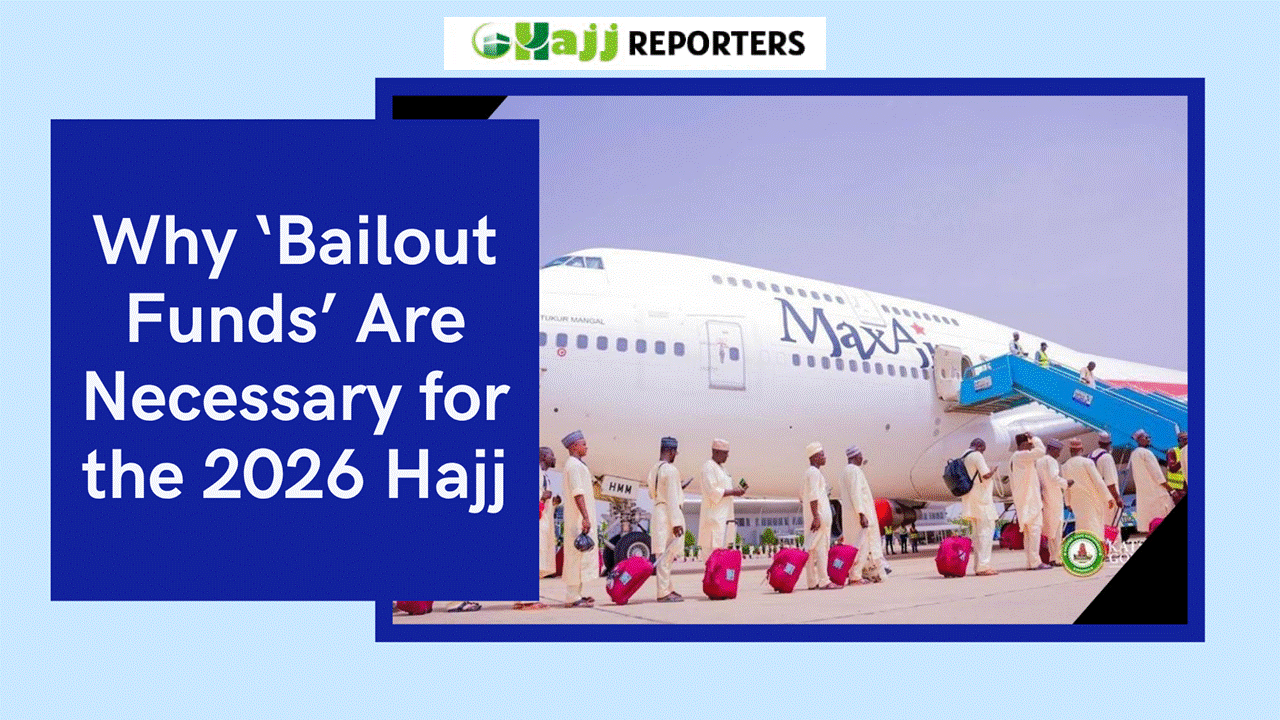
The recent appeal by the Independent Hajj Reporters (IHR) to state governors to provide advance payments for the 2026 Hajj has drawn mixed reactions from stakeholders within the Hajj sector. While some described the proposal as unnecessary, it is important to clarify the rationale behind this call and why such short-term financial support has become imperative.
The policy guiding pre-Hajj preparations originates from the Saudi authorities and applies uniformly to all 162 Hajj-participating countries. However, the current registration process for intending pilgrims in Nigeria remains lengthy and often delays the timely remittance of funds to Saudi service providers. This delay poses a major challenge to meeting financial and contractual deadlines ahead of the annual pilgrimage.
Ideally, the Hajj Savings Scheme (HSS) could have served as a buffer to support payments for pilgrims under the “pay-as-you-go” model. Unfortunately, the scheme is yet to gain full adoption among state Muslim Pilgrims Welfare Boards.
Another possible alternative would be for the National Hajj Commission of Nigeria (NAHCON) to introduce a three-year Hajj registration cycle, which would allow prospective pilgrims to pay a 50 percent deposit of the current fare toward future Hajj exercises. This long-term approach could help ensure a steady flow of funds for pre-Hajj commitments.
It is also crucial to note that any funds advanced by state governments would be fully refunded. A working example can be seen in Jigawa State, where such arrangements have been successfully implemented in recent years. For instance, if a state government advances payment for 5,500 pilgrims and only 4,500 eventually complete registration, the balance for the unutilized 1,000 seats would automatically be refunded through the NUSUK Hajj registration system.
Furthermore, states can instruct their pilgrims’ boards to remit refunds weekly based on the number of registered pilgrims, ensuring transparency and accountability in fund management.
The appeal by the Independent Hajj Reporters is therefore not a request for subsidy but a pragmatic call for temporary financial intervention to help states meet early payment deadlines set by Saudi authorities. The initiative is intended to protect the interests of Nigerian pilgrims and sustain Nigeria’s position as one of the top five Hajj contingents globally and the leading delegation in Africa.
