


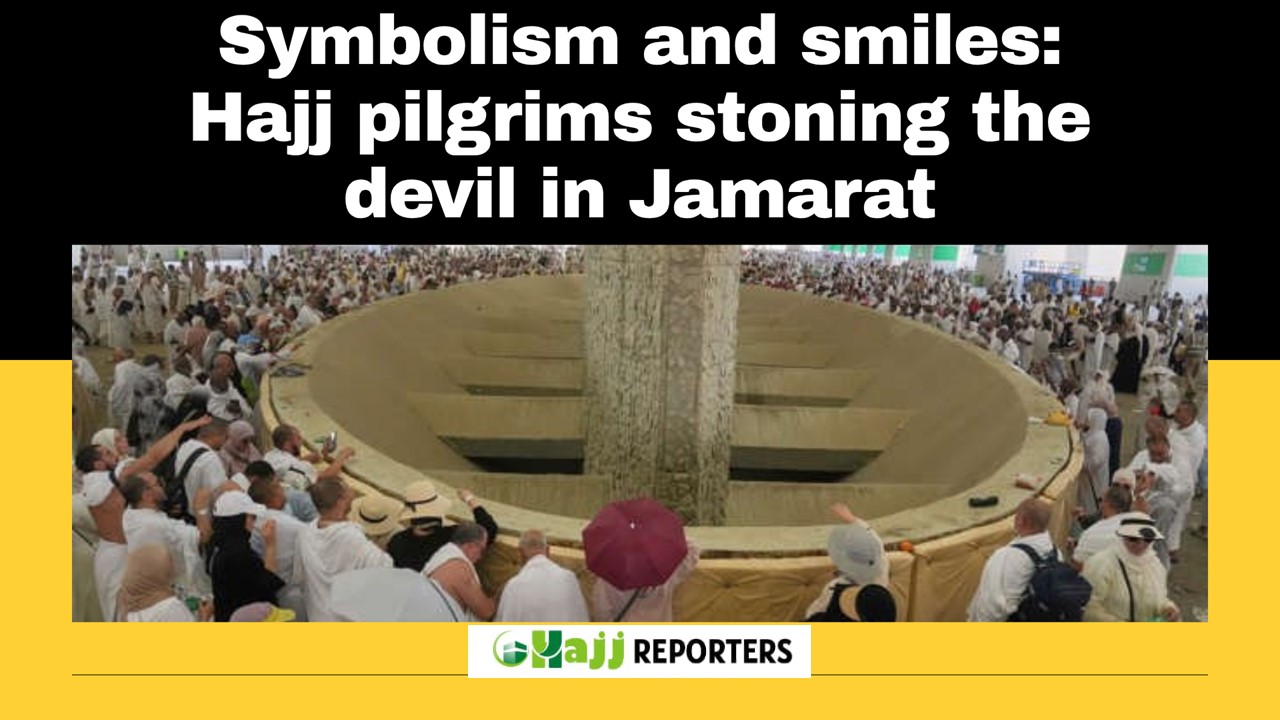
For some, the stoning of the devil ritual at the Hajj in Saudi Arabia marks a solemn moment, a complete submission to God. For others, it represents a victory over evil.
Subardi Abdulaha, from Indonesia, was one of more than 1.6 million pilgrims in Mina on Friday throwing pebbles at pillars with gusto.
Ibrahim was prepared to submit to the command, but God stayed his hand and spared his son. In the Christian and Jewish versions of the story, Abraham is ordered to kill his other son, Isaac.
The Eid al-Adha holiday, observed worldwide by Muslims and timed to coincide with the end of the Hajj, celebrates Ibrahim’s submission to God.
After the stoning ritual, men shaved their head and women trimmed their hair by a length of a fingertip. Those who could afford it sacrificed an animal.
Saudi officials were stationed throughout Mina to assist pilgrims, providing them with directions and distributing water to ease the strain of the heat. Temperatures reached a high of 46 degrees Celsius (114 degrees Fahrenheit) on Friday.
Many pilgrims went to Mecca afterwards to circuit the Kaaba, the black, cube-shaped structure in the holy city, and walk between the hills of Safa and Marwah, completing the core rites of the Hajj.
