
By Mohammed Ibrahim
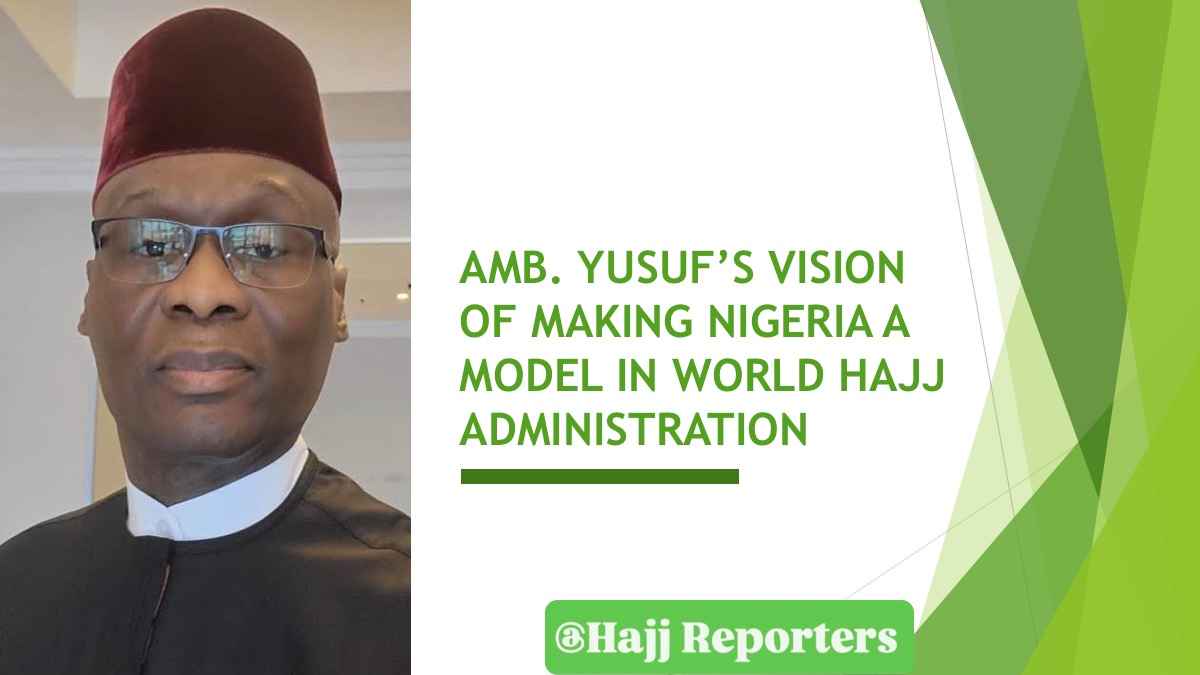
With 37 years of diplomatic experience, a history of studying Malaysia and Indonesia’s pilgrimage systems, and a renewed reform agenda under President Bola Ahmed Tinubu and Vice President Kashim Shettima, NAHCON enters a defining chapter in the pursuit of international excellence.
The bigger question is more compelling:
Why should Nigeria, with its enormous Muslim population, institutional experience and international influence, not aspire to become one of the world’s most respected countries in Hajj administration?
It is a question that challenges old assumptions, demands new standards, and places the welfare of pilgrims at the heart of national responsibility.
It is to make the Nigerian pilgrim’s experience safer, more predictable, more dignified and less vulnerable to avoidable administrative failures.
No verified annual Saudi ranking establishes Malaysia or Indonesia as the best-performing Hajj nations every year; nevertheless, their institutional experiences provide useful benchmarks for Nigeria’s ambitious reforms.
A credible Hajj system must be one in which no individual is powerful enough to override the rules, no intermediary is beyond scrutiny, and no pilgrim is left without protection.
Those who operate legitimately should have nothing to fear from transparent procedures. Those who exploit weaknesses should face investigation and appropriate consequences under the law. The reform objective must be institutional discipline, not personal confrontation.
From Abuja to Makkah, from diplomatic experience to institutional reform, the journey towards excellence must ultimately be measured by the dignity of every Nigerian pilgrim.
Alhaji Ibrahim is the Publisher/Editor-in-Chief of The Nationalist Magazine, and the National Coordinator of Project 774 Network.
