


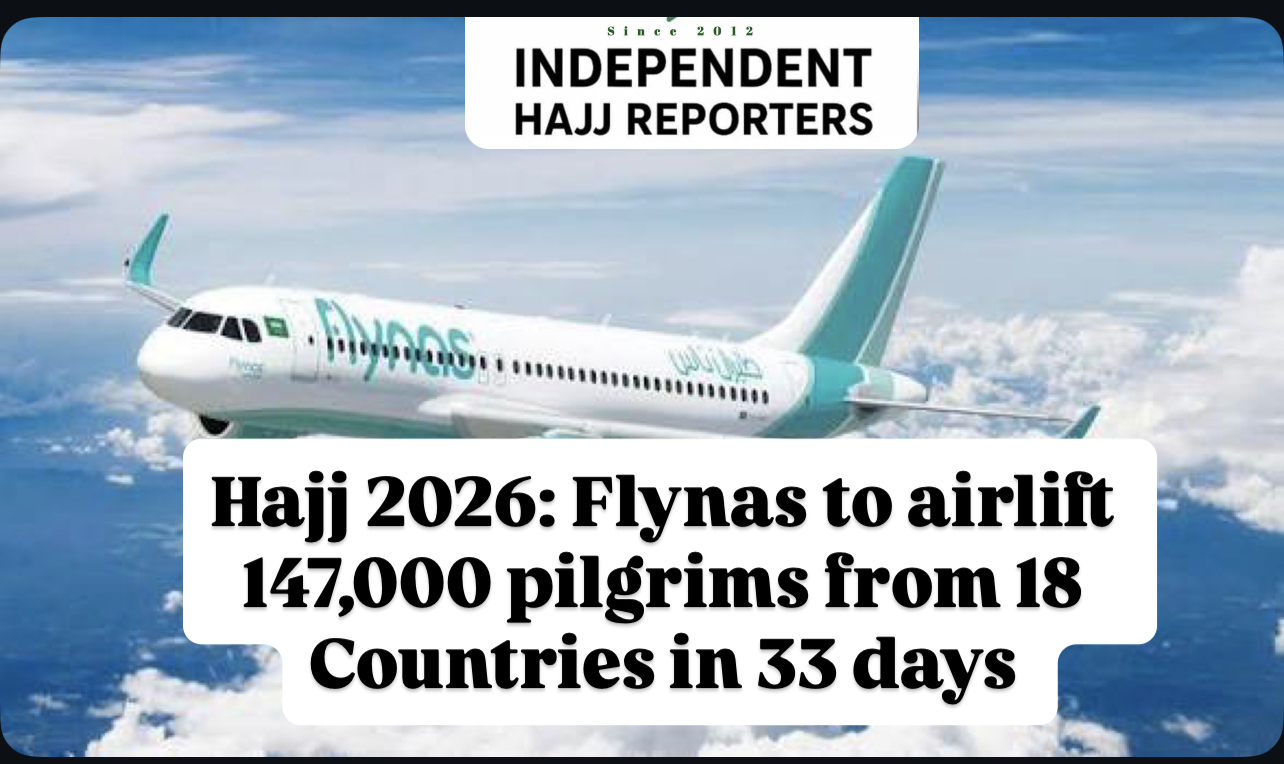
Saudi Arabia’s low-cost carrier Flynas has launched its Hajj season operations for 25 to 30 May 2026 pilgrimage, targeting the transport of more than 147,000 pilgrims from 18 countries.
The programme will run over a 33-day initial phase focused on inbound pilgrim traffic, supported by expanded fleet capacity and increased operations across the airline’s bases in Riyadh, Jeddah, Dammam and Madinah.
Destinations span Asia, Africa and Europe, with routes covering countries such as India, Morocco, Türkiye, Nigeria, Bangladesh, Jordan, Iraq and Kuwait.
Flynas is also participating in the Makkah Route Initiative, a Saudi government programme launched in 2019 to streamline travel procedures for pilgrims in their home countries, reducing processing times on arrival in the kingdom.
The move comes as Flynas continues to expand its international footprint. The airline currently operates more than 150 routes to more than 80 destinations across 38 countries, supported by more than 2,000 weekly flights.
The carrier also launched six new international routes from Abha in Saudi Arabia, strengthening connectivity from the southwest of the Kingdom. Services began on 29 March 2026, with year-round flights to Dubai, Cairo, Istanbul and Addis Ababa, alongside seasonal routes to Kuwait and Trabzon on Türkiye’s Black Sea coast, providing direct access to the Aseer mountain region.
Growth has also extended into new markets. The carrier recently signed an agreement to establish a joint-venture airline in Syria, with operations expected to begin in Q4 2026 subject to regulatory approvals. The move is aimed at restoring regional connectivity and expanding Flynas’ low-cost network across the Middle East, Africa and Europe.
Elsewhere, the airline is expanding its presence in North Africa, including plans to introduce new services to Rabat in Morocco, building on existing routes to Casablanca launched in 2023. The carrier has transported more than 300,000 passengers between Saudi Arabia and Morocco since entering the market.
Flynas aims to grow its network to 165 destinations as part of its long-term expansion strategy aligned with Saudi Arabia’s Vision 2030
