


By Haruna Abubakar
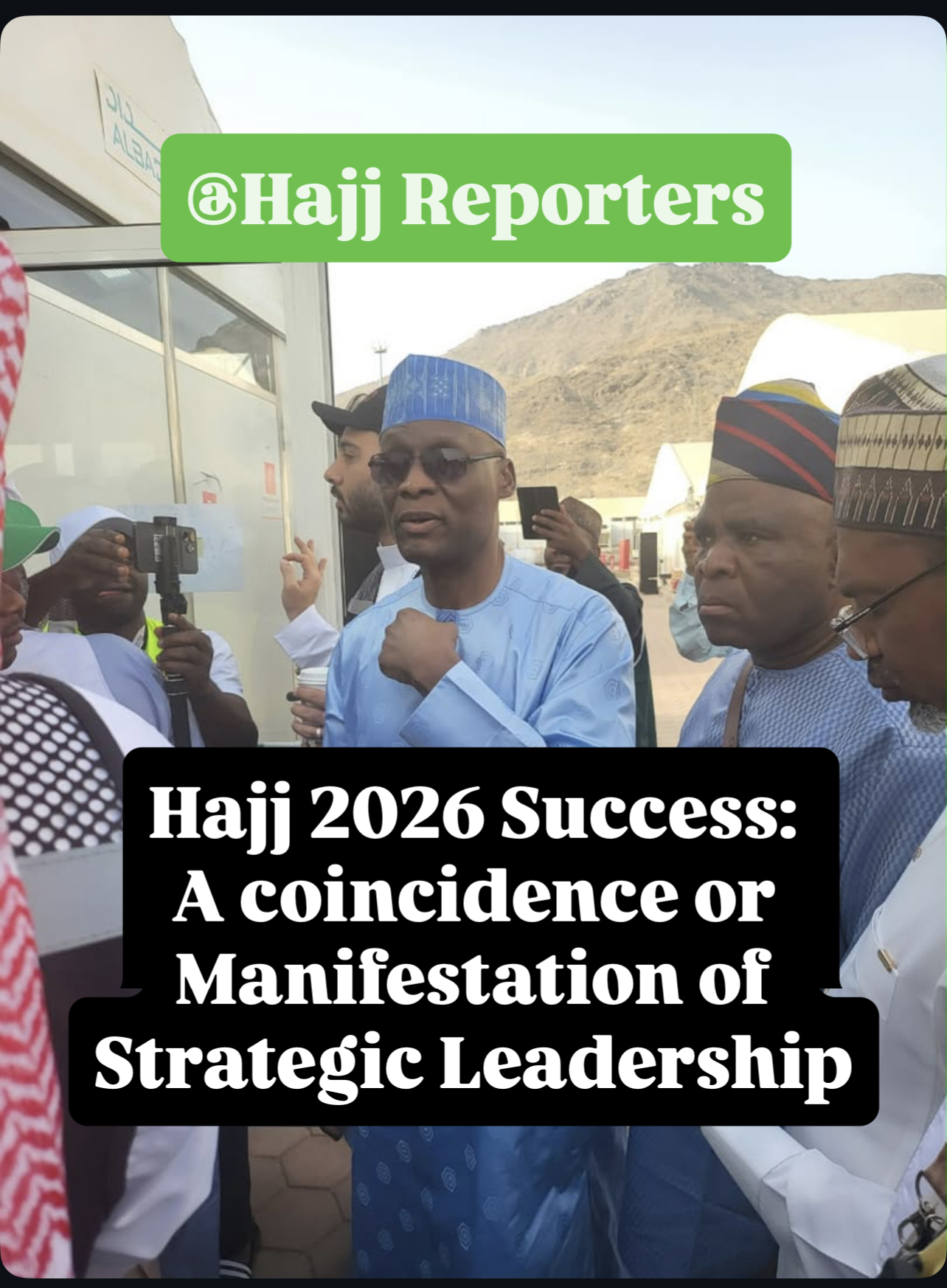
The successful conduct of the 2026 Hajj by the National Hajj Commission of Nigeria (NAHCON) under the leadership of its Chairman, Ambassador Ismail Abba Yusuf, has prompted many stakeholders to ask whether the remarkable achievements recorded were merely coincidental or the result of deliberate strategic leadership.
From the planning stage to the conclusion of the return airlift, the Commission delivered one of Nigeria’s most organised Hajj operations in recent years. More than 38,000 Nigerian pilgrims were safely returned to their various states by June 23, 2026, marking the successful completion of the exercise within schedule.
One of the most outstanding achievements was the efficient management of the airlift operations. Both the outbound and return flights were well coordinated, with the return phase completed within a short period, allowing pilgrims to reunite with their families without prolonged delays.
Pilgrims also experienced notable improvements in welfare services. Feeding arrangements in Makkah and Madinah received widespread commendation, while accommodation was generally regarded as better organised and of higher quality than in previous Hajj seasons.
The Commission also secured a major financial relief for Nigerian pilgrims after successfully engaging the Central Bank of Nigeria (CBN) to approve cash payment of the Personal Travel Allowance (PTA) for the 2026 Hajj. The arrangement provided a one-year transition period before the planned migration to a fully digital card-based system beginning with the 2027 Hajj.
Ambassador Yusuf’s leadership attracted commendations from several state pilgrims’ welfare boards, state governments, including Zamfara State, and independent Hajj stakeholders who praised the Commission’s improved coordination and service delivery.
Despite the successful conclusion of the pilgrimage, NAHCON continued to monitor the welfare of Nigerian pilgrims who remained hospitalised in Saudi Arabia, ensuring that they received the necessary medical attention until their eventual return home.
Looking ahead, the Commission has initiated plans to modernise its operational processes through the deployment of more advanced electronic systems in line with Saudi Arabia’s Vision 2030 digital transformation agenda.
Internally, the Chairman has fostered greater discipline, teamwork and confidence among members of the Commission’s management and workforce, creating a more result-oriented institutional culture.
Another notable leadership approach was his delegation of responsibilities to non-permanent commissioners, who were entrusted with key operational assignments during the 2026 Hajj. This broadened participation in decision-making and strengthened operational efficiency across different departments.
Beyond the achievements of the 2026 pilgrimage, NAHCON has already begun laying the foundation for future Hajj operations. Plans are underway to overhaul the Hajj Savings Scheme to make it more attractive, transparent and accessible to intending pilgrims. At the same time, strategic preparations have commenced not only for the 2027 Hajj but also for the 2028 pilgrimage, reflecting a leadership style focused on long-term planning rather than short-term successes.
Taken together, these achievements suggest that the success of the 2026 Hajj was not a matter of chance. Rather, they reflect careful planning, strategic leadership, effective stakeholder engagement and a clear vision for the future of Hajj administration in Nigeria.
