


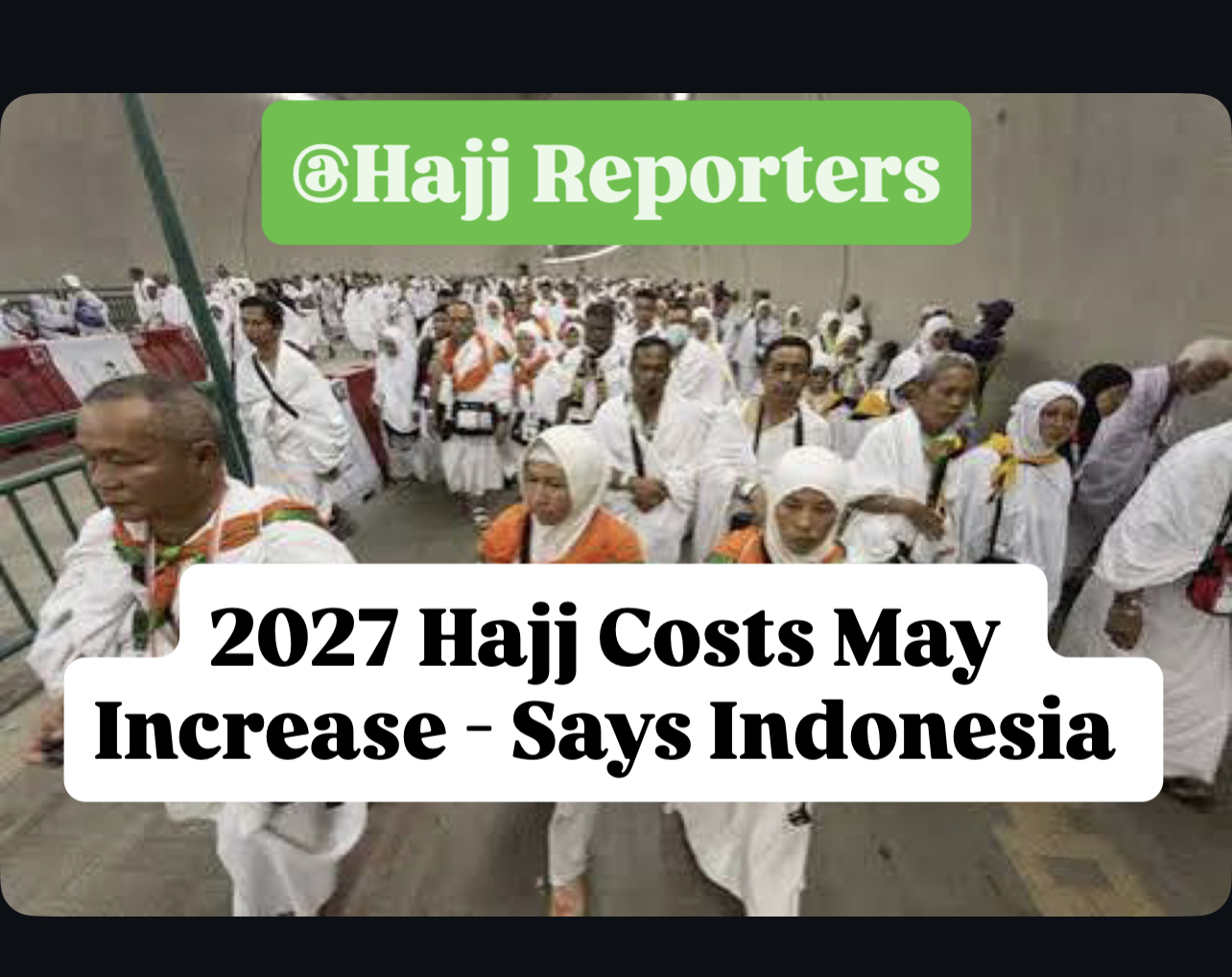
The chair of Commission VIII of Indonesia’s House of Representatives (DPR), Marwan Dasopang, said the cost of performing the Hajj pilgrimage could increase next year due to higher taxes and rising commodity prices in Saudi Arabia.
“The increase in prices and taxes in Saudi Arabia cannot be avoided, so the cost of the Hajj is likely to rise,” Marwan said during the National Working Meeting on the 2026 Hajj Evaluation at the Hajj Dormitory in Jakarta on Saturday, July 4. His remarks were broadcast on the Ministry of Religious Affairs’ YouTube channel.
Despite the anticipated increase, Marwan said Commission VIII hopes to keep Hajj costs from rising. He noted that lawmakers and the Ministry of Religious Affairs will review the Hajj budget to identify areas where spending can be reduced.
“For example, flight costs,” he said.
Efforts to Keep Hajj Costs Down
Marwan suggested that Hajj transportation could be be handled by a single airline to improve efficiency.
However, he acknowledged that existing regulations require Hajj flights to be shared among multiple airlines.
He also raised concerns over complaints from participants in Indonesia’s special Hajj program, which is privately managed and typically offers premium services at a higher cost.
According to Marwan, some special Hajj pilgrims expressed dissatisfaction after finding that accommodations provided to regular Hajj pilgrims in Madinah were of higher quality.
“Resentment has emerged among special Hajj pilgrims because regular pilgrims are now staying in Ring 1 accommodations in Madinah, which in some cases offer better facilities than those provided under the special Hajj program,” he said.
Mina Congestion Remains a Challenge
Marwan highlighted ongoing challenges in managing overcrowding in Mina during the Hajj pilgrimage.
He called for careful planning of the tanazul policy, which allows certain pilgrims to leave Mina earlier or stay outside the area to ease congestion.
“It is necessary to ensure that pilgrims are fully prepared to participate in the tanazul program because the congestion issue in Mina must be resolved,” he said.
He added that the DPR’s Hajj Monitoring Team has completed its evaluation of this year’s pilgrimage and is awaiting the Ministry of Religious Affairs’ official assessment before holding joint discussions on possible improvements.
2026 Hajj Services Show Improvement
Overall, Marwan said the organization of the 2026 Hajj was better than the previous year’s operation.
He cited improvements in domestic preparations, including visa processing and the confirmation of departing pilgrims.
“However, there are still areas that need improvement, particularly services provided to Indonesian pilgrims in Saudi Arabia,” he said.
Indonesia officially concluded its 2026 Hajj operations on July 1 after receiving an official quota of 221,000 pilgrims this year.
The 2026 Hajj operation began on April 21, with the peak wukuf ritual at Arafah taking place on May 26. The repatriation of Indonesian pilgrims started on June 1 and concluded between June 30 and July 1.
