


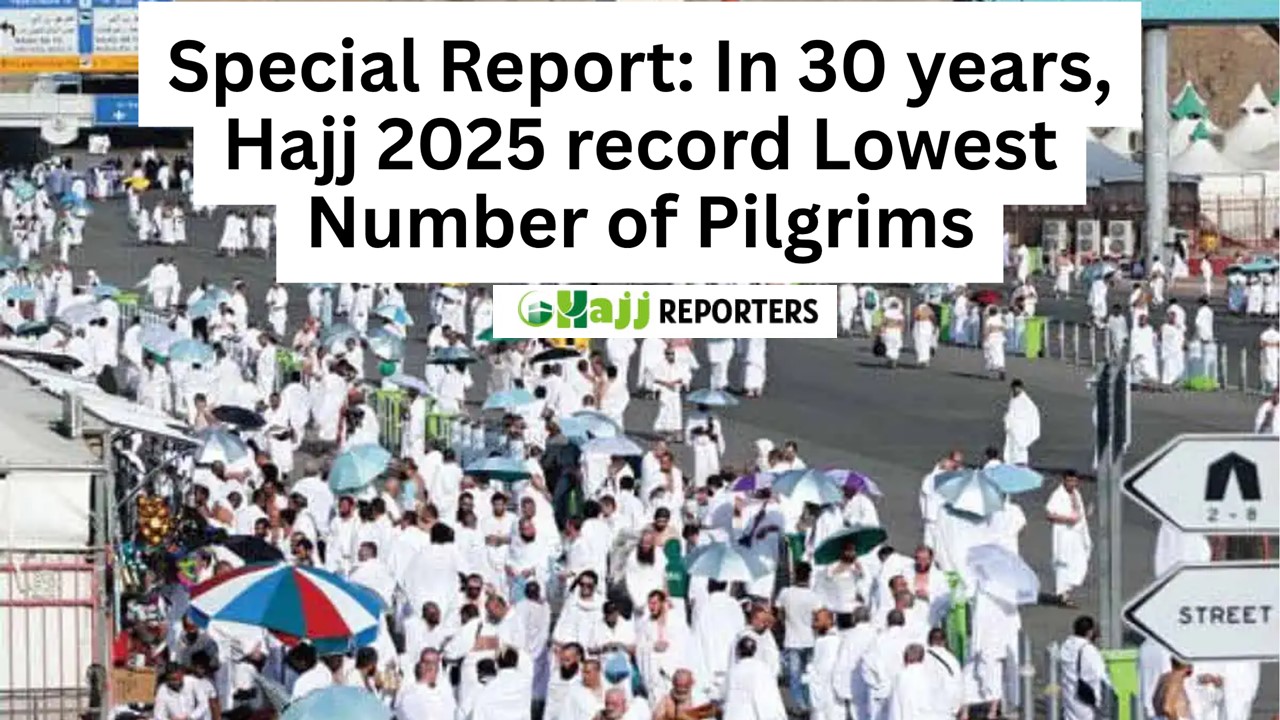
Attendance at the Hajj 2025 was the lowest in 30 years (excluding COVID-19) as economic pressures, extreme heat, and stricter entry rules affected pilgrim numbers.
Hajj 2025 concluded today, 6 June 2025 (10 Dhul Hijjah 1446), with a total of 1,673,230 pilgrims completing the pilgrimage— the lowest turnout in three decades outside of the COVID-19 period, according to data released by the Hajj Ministry on X.
This figure marks a decline of nearly 160,000 pilgrims compared to the 2024 season and falls significantly short of pre-pandemic levels when Hajj attendance routinely surpassed two million.
Of those who participated this year, 1,506,576 were international pilgrims, while 166,654 were residents of Saudi Arabia.
In contrast, the record-breaking Hajj of 2012 drew 3.16 million worshipers, highlighting the substantial drop in numbers for 2025. Officials have not offered an official explanation, but several contributing factors appear evident.
Economic challenges were a primary concern. Global inflation and rising costs for travel, accommodations, and sacrificial animals placed a heavier financial burden on pilgrims—especially those from lower-income communities in South Asia and Africa, which historically supply a large share of Hajj attendees.
The increased expenses appear to have discouraged some would-be pilgrims from undertaking the journey.
Stricter entry protocols also played a role. Health and vaccination requirements, more rigorous visa processing, and tightened screening—measures that were introduced during the pandemic—remained in effect for Hajj 2025.
Statistics
| Year | Total Pilgrims |
| 1995 | 1,781,370 |
| 1996 | 1,865,234 |
| 1997 | 1,942,851 |
| 1998 | 1,832,114 |
| 1999 | 1,831,998 |
| 2000 | 1,839,154 |
| 2001 | 1,913,263 |
| 2002 | 1,944,760 |
| 2003 | 2,041,129 |
| 2004 | 2,012,074 |
| 2005 | 2,164,469 |
| 2006 | 2,130,594 |
| 2007 | 2,454,325 |
| 2008 | 2,408,849 |
| 2009 | 2,313,278 |
| 2010 | 2,789,399 |
| 2011 | 2,927,717 |
| 2012 | 3,161,573 |
| 2013 | 1,980,249 |
| 2014 | 2,085,238 |
| 2015 | 1,952,817 |
| 2016 | 1,862,909 |
| 2017 | 2,352,122 |
| 2018 | 2,371,675 |
| 2019 | 2,489,406 |
| 2020 | ~1,000 |
| 2021 | 58,745 |
| 2022 | 926,062 |
| 2023 | 1,845,045 |
| 2024 | 1,833,164 |
| 2025 | 1,673,230 |
These protocols, while aimed at safeguarding public health, led to longer processing times and added bureaucratic hurdles for prospective pilgrims.
Another significant factor was extreme heat. Temperatures in Makkah and surrounding pilgrimage sites frequently exceeded 40 °C (104 °F) throughout the season.
Although authorities expanded shaded areas by 50,000 square meters, deployed more than 400 cooling stations, and stationed additional medical teams across key locations, many pilgrims may have chosen to defer their pilgrimage rather than face the intense conditions.
On 6 June 2025, pilgrims gathered at Mount Arafat to perform the central rite of Hajj, spending hours in worship and reflection under sweltering sun.
Arafat—a site of profound significance in Islam as the location of Prophet Muhammad’s final sermon—remained the spiritual centerpiece of this year’s pilgrimage. Despite the challenging weather, those on Arafat fulfilled their obligation, demonstrating resilience and devotion.
Regional officials reported that over 250,000 personnel from more than 40 government agencies collaborated to maintain health, safety, and logistical support throughout the pilgrimage. These coordinated efforts ensured that, despite the heat and lower attendance, Hajj 2025 concluded without any major security or health incidents.
Analysts point to economic hardship, continued health precautions, and extreme temperatures as the primary reasons behind the lowest attendance in 30 years outside the pandemic.
Saudi authorities are expected to review these factors and consider adjustments to facilitate greater accessibility and affordability for future pilgrims, while still maintaining necessary safety measures.
Additional report from Islamicinf
