


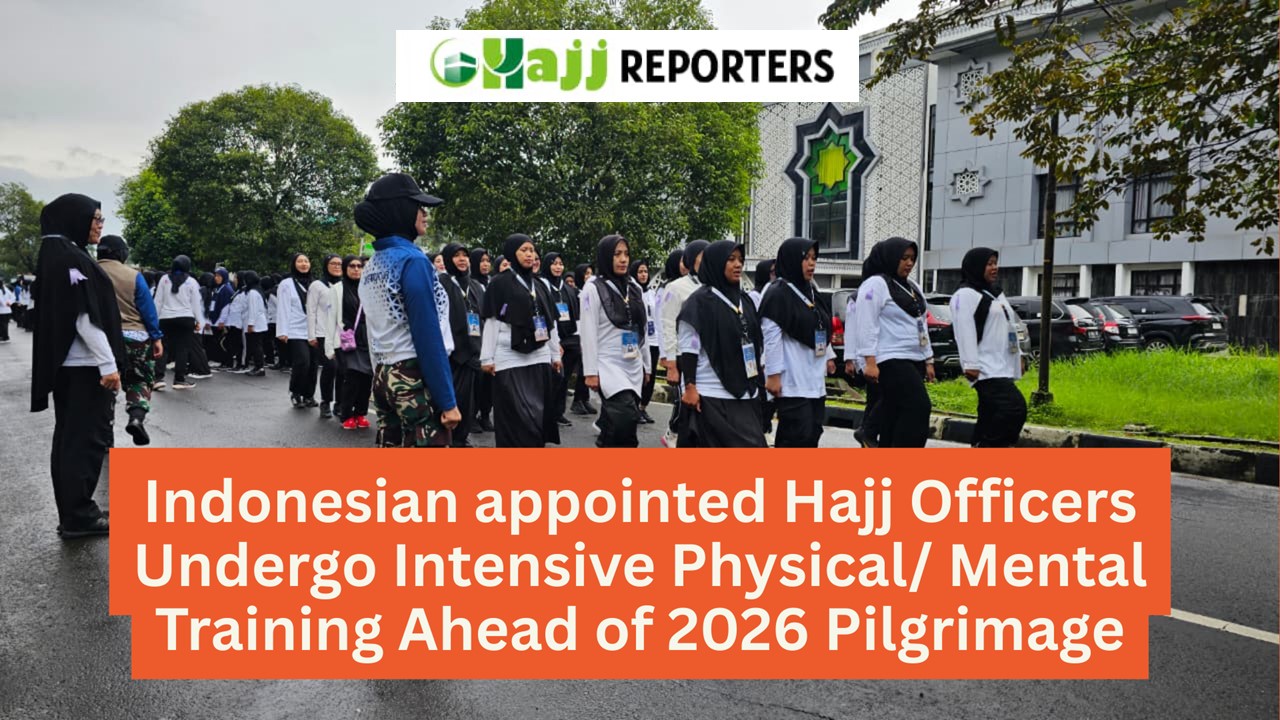
Jakarta, MINA — Strengthening physical endurance and mental resilience has become a key focus of training for Indonesia’s Hajj pilgrimage officers ahead of the 1447 AH/2026 Hajj season in Saudi Arabia.
The emphasis was highlighted by Suviyanto, Head of the Subdirectorate for Partnership Facilitation in the Hajj and Umrah Economic Ecosystem, during a briefing for prospective officers at the Pondok Gede Hajj Dormitory in East Jakarta on Monday.
“Hajj officers must be physically strong, mentally resilient, and emotionally composed,” Suviyanto said. “They serve people from diverse backgrounds and conditions, often under intense pressure.”
As part of the Hajj Officers Training Program (PPIH), participants undergo physical conditioning and discipline exercises, including marching drills conducted by instructors from the Indonesian National Armed Forces (TNI) and National Police (Polri). The program aims to instill discipline, teamwork, professionalism, and operational readiness.
Suviyanto stressed that the responsibilities of Hajj officers extend throughout the entire pilgrimage process, from departure and service in the Holy Land to the pilgrims’ return home. Officers are also expected to provide special assistance to elderly pilgrims, persons with disabilities, and those with high health risks.
Beyond technical competence, officers are required to ensure smooth operations at embarkation and disembarkation points, as well as during the pilgrimage in Saudi Arabia, while maintaining ethical conduct and exemplary behavior.
“We want our officers to lead by example, showing patience, empathy, and sincerity in serving the pilgrims,” he said.
Suviyanto also urged officers to view their role as a form of devotion, reminding them that pilgrims are regarded as guests of God and must be treated with dignity and equality, regardless of background or social status.
“When we serve pilgrims, we are honoring God,” he said. “All pilgrims are equal, because they are guests of Allah.”
He added that the success of Hajj operations should not be measured solely by technical execution, but also by the quality and sincerity of service experienced by pilgrims.
In closing, Suviyanto emphasized the importance of family support, encouraging officers to seek their families’ blessings before deployment.
“Seek your family’s consent and prayers before leaving. God willing, your duties will be lighter and filled with blessings,” he said.
The training program is expected to produce Hajj officers who are not only operationally prepared, but also mentally strong and spiritually committed, recognizing that serving pilgrims is both a responsibility and a profound honor. []
