
The Nusuk Hajj permit system reduces illegal Hajj pilgrims mainly by making legal status easy to check at every checkpoint, so only authorized pilgrims can access the holy sites.
Nusuk turns the Hajj permit into a verifiable, hard-to-forge digital/physical ID that’s checked everywhere. Since access to rituals, transport, and accommodation is linked to the card, illegal pilgrims can’t blend in or access the main sites without it.
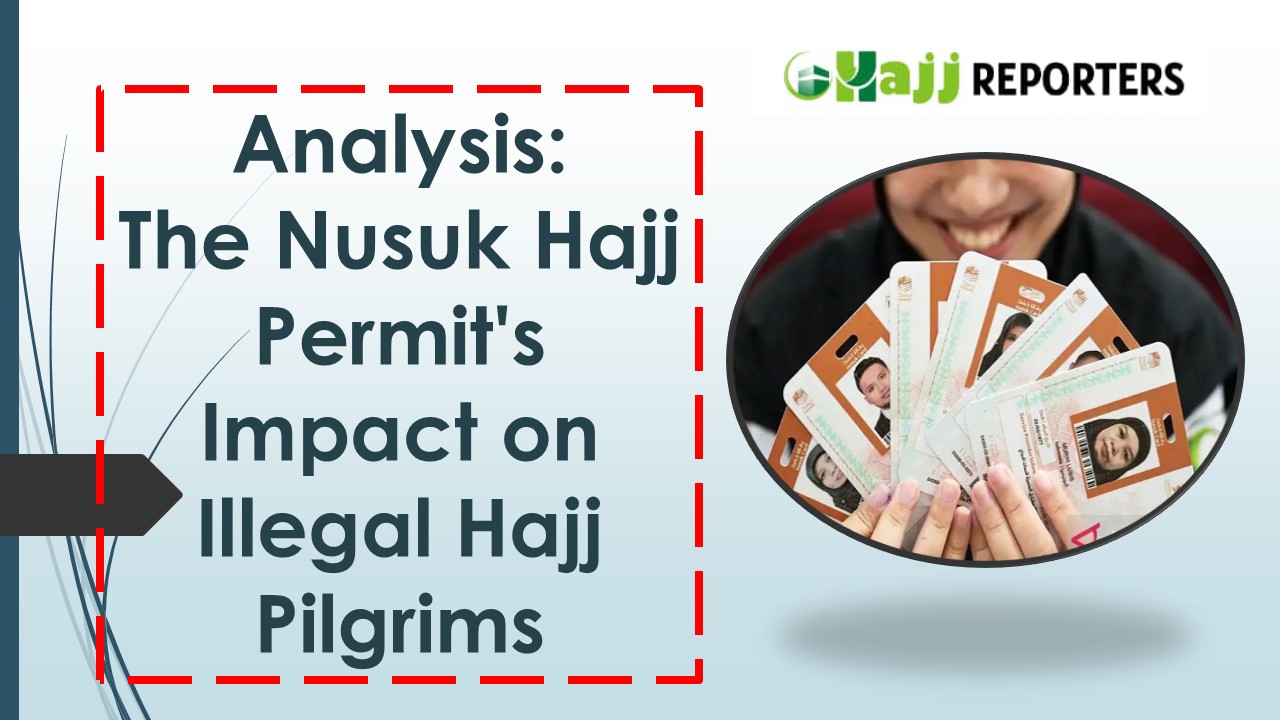
The Mandatory Nusuk Card as legal ID makes Nusuk Card as the official document that guarantees a pilgrim’s legal status.
– It’s required to enter Makkah, the Grand Mosque, Mina, Muzdalifah, and Arafat.
– Without it, pilgrims are prevented from accessing the holy sites.
The Digital verification prevents unauthorized entry because Hajj security services verify identity by scanning the card worn around the neck. This stops unauthorized people from entering the holy sites.
The card contains pilgrim data, Hajj permit status, passport details, accommodation, and service provider info.
It’s available in physical and digital formats via the Nusuk and Tawakkalna apps, so checks can be done instantly at checkpoints.
The Anti-forgery features and entry all also restricts illegal pilgrims because it can’t be ghosted.
The enhanced Nusuk Card has QR codes and multiple security layers to prevent forgery.
Saudi Authorities use drones, AI, and thermal cameras to catch people transporting unauthorized pilgrims.
Penalties are severe: fines up to SR 100,000, prison, deportation, 10-year ban from Saudi Arabia, and vehicle confiscation.
Nusuk care has ensure a better crowd management and accountability
Smart sensors in Mina link to the Nusuk Card to regulate movement using real-time crowd density data.
This helps authorities identify and remove unauthorized individuals, reducing overcrowding caused by illegal pilgrims.
