


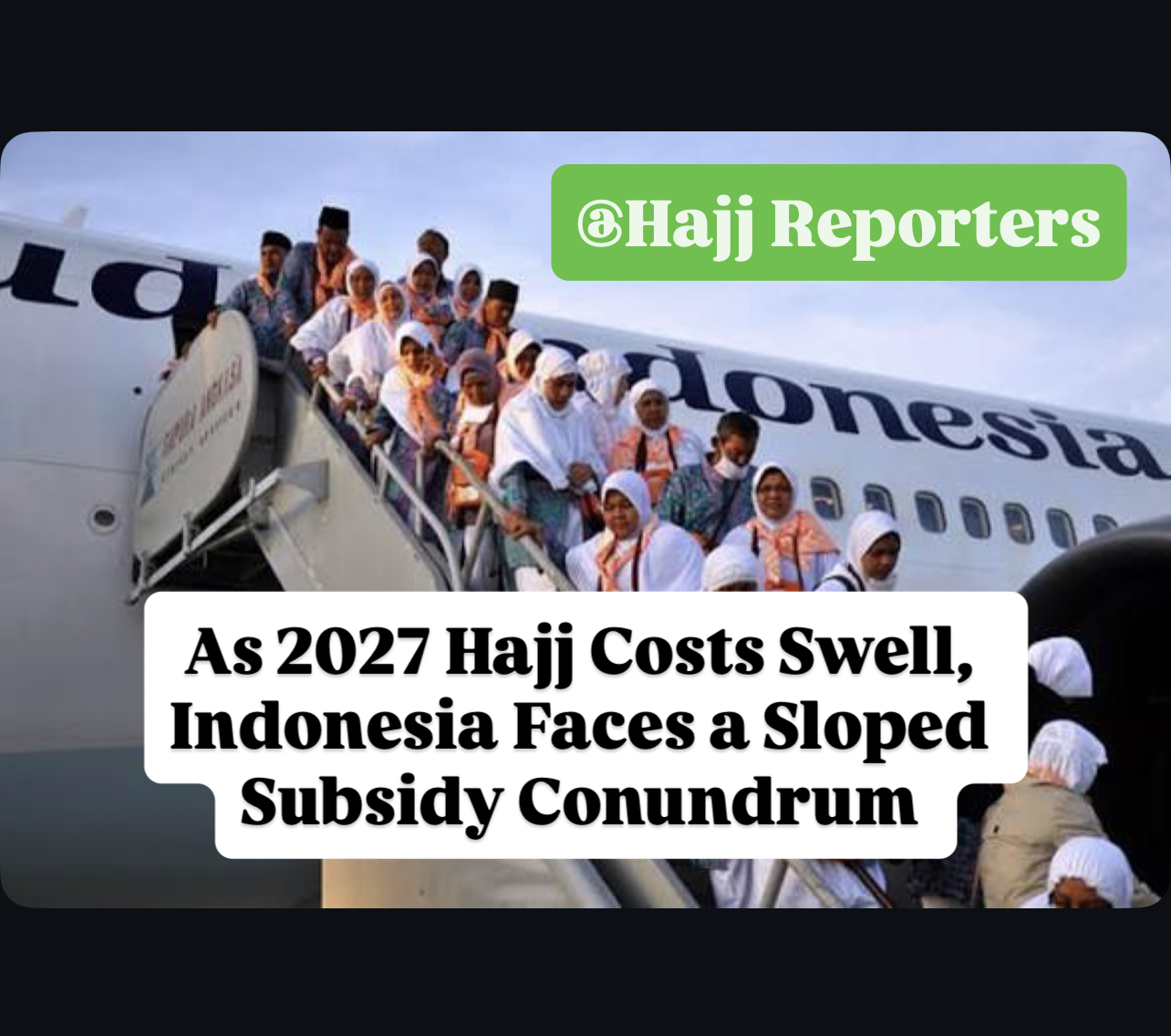
As home to the world’s largest Muslim population, Indonesia sees an immense demand for the Hajj, the annual Islamic pilgrimage to Mecca (Saudi Arabia) which stands as one of the Five Pillars of Islam. However, a fragile rupiah and high global oil prices heavily impact the costs of overseas hospitality, aviation, and medical care, making the pilgrimage significantly more expensive
Not only is that a challenge for the Indonesian Muslim who wants to perform the Hajj but also for the government as it ‘subsidizes’ a significant portion of the traveller’s costs.
The Hajj subsidy structure is actually a unique one as it differs markedly from conventional subsidies that are taken from the annual State Budget (APBN). When someone signs up for Hajj in Indonesia, they pay an initial deposit of IDR 25 million (approx. USD $1,400) to get on the waiting list. Considering there are currently around 5.5 million Indonesians on that list, it accumulates a massive pool of money that is managed by the Hajj Financial Management Agency (BPKH).
BPKH takes this huge pot of money and invests it into safe, Sharia-compliant instruments (such as state Islamic bonds/sukuk and Islamic banking deposits). These investments generate returns (called Nilai Manfaat) of about IDR 10 trillion to IDR 12 trillion every year. When a group of pilgrims finally gets their turn to fly out, the government uses those accumulated investment returns to pay for a huge chunk of their total bill.
So, in 2026, the structure is as follows. The government ‘subsidizes’ 38 percent of the Hajj costs for the individual through the generated investment returns (Nilai Manfaat), while the individual has to cover the remaining 62 percent (deducting the IDR 25 million deposit that was paid to get on the waiting list).
