


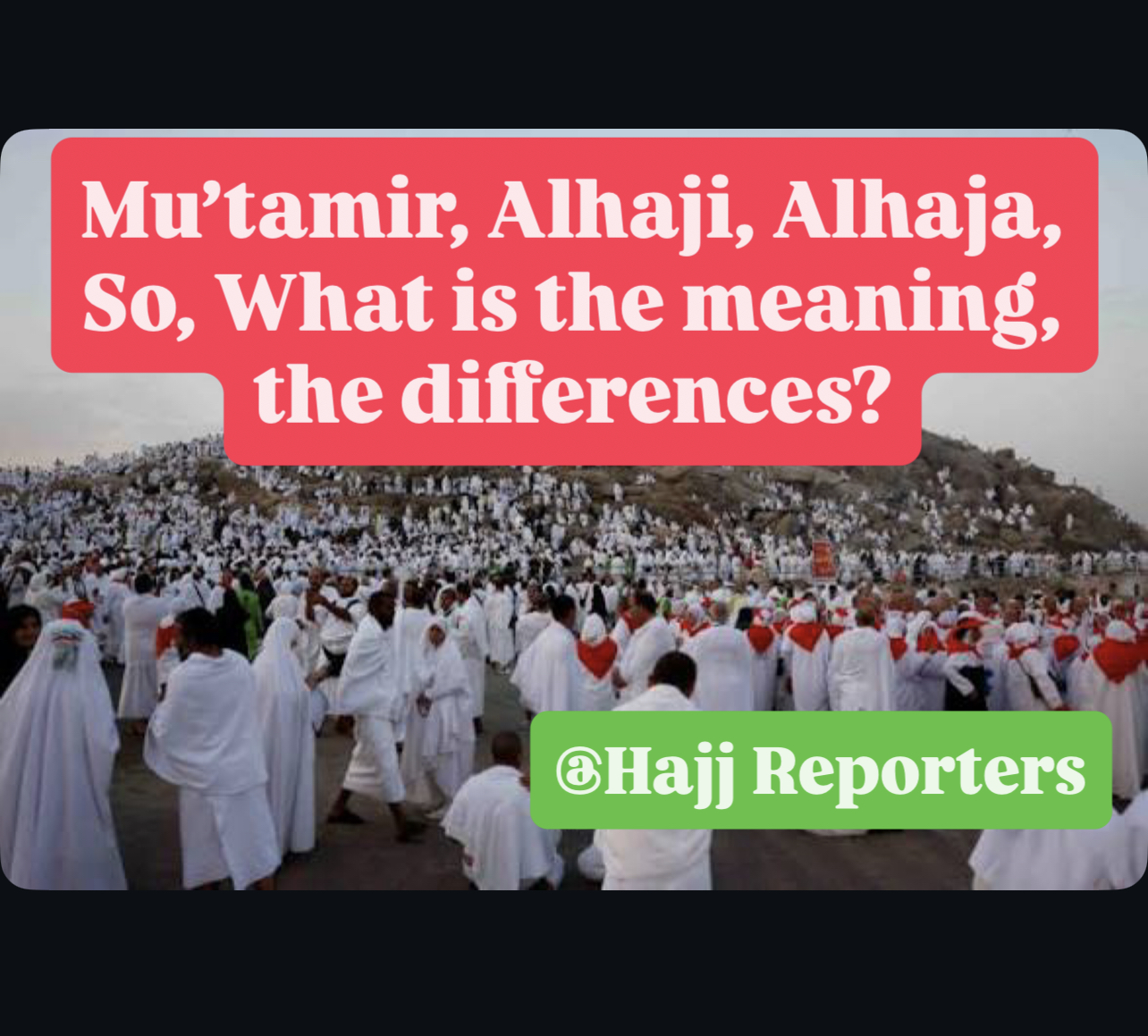
Literal meaning: Alhaji” comes from Arabic *Al-Ḥājj / Al-Hajji* الحاج.
It means “the pilgrim” — specifically someone who has performed Hajj to Makkah.
How it’s used
Title of honor: Muslims add it in front of a man’s name after he completes Hajj.
Example: Alhaji Musa, Alhaji Sani
-For women: The equivalent is *Alhaja* or Hajiya
Example: Alhaja Aisha, Hajiya Fatima
Cultural note
In many West African countries like Nigeria, Ghana, and Senegal, “Alhaji/Alhaja” is also used as a sign of respect, even beyond just religious context. Over time it became a common honorific for elders and respected community members.
Spiritual significance
It’s not just a name tag. It reminds the person and others of the commitment to live by the values of Hajj: humility, forgiveness, generosity, and obedience to Allah.
here’s the difference
Alhaji / Al-Hajj / Hajji* الحاج
Meaning*: “The Pilgrim”
*Who*: A man who has completed the *Hajj* pilgrimage in Makkah during Dhul-Hijjah.
For women*: *Alhaja / Hajiya*
*When used*: For life. It’s an honorific title added to the name.
Example: _Alhaji Bello_ performed Hajj in 2024.
Hajji” and “Alhaji” are the same word, just different spellings/transliterations.
Mu’tamir المعتمر
Meaning: “The Umrah pilgrim
Who: A man who has performed *Umrah* — the lesser pilgrimage.
For women: Mu’tamirah
When used: Usually not used as a permanent title like Alhaji. People don’t typically keep “Mu’tamir” in front of their name forever.
Example: _I went as Mu’tamir last Ramadan.
