


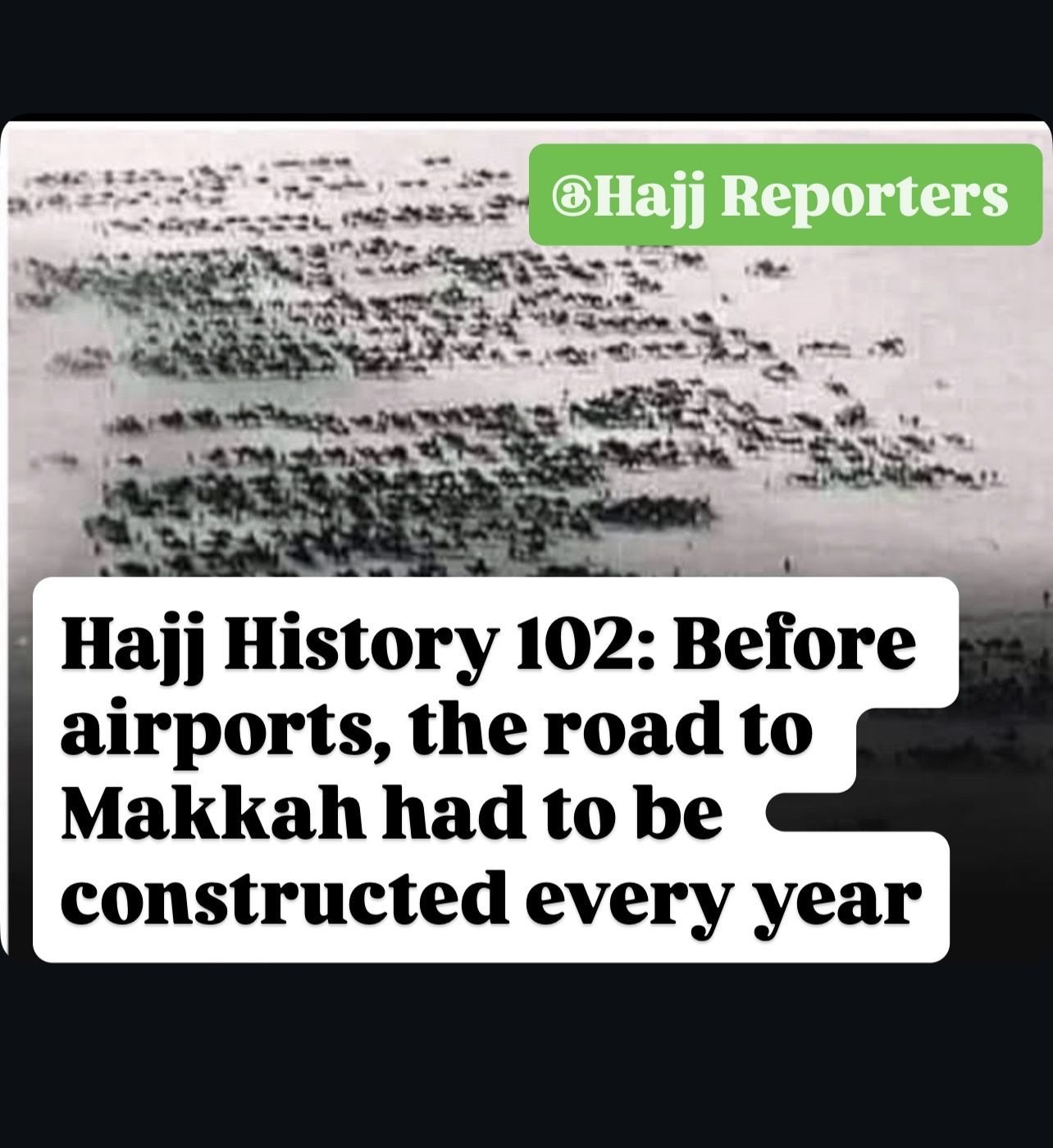
From Damascus and Cairo, Hajj caravans moved across difficult terrain as organised Muslim systems—not simply as camel trains. They required commanders, judges, bakers, animal care, water, shelters, route protection and the diplomacy needed to keep a long passage open.
In Cairo, the Mahmal turned departure into a public ceremony. In Damascus, the caravan belonged to a wider Ottoman infrastructure that linked pilgrims, officials and the road itself. The Mahmal was not a container for a person; it was a ceremonial palanquin and a political symbol associated with the rulers who sponsored the caravan and cared for the Holy Sanctuaries.
Over time, steamships and the Suez Canal changed the journey. But the old caravan roads still reveal something important: pilgrimage depended on devotion, organisation and collective responsibility.
Which part of the Hajj caravan system should we trace next—water, security, route stations or the Mahmal? Save this carousel for the system behind the journey.
#hajj #umrah
