


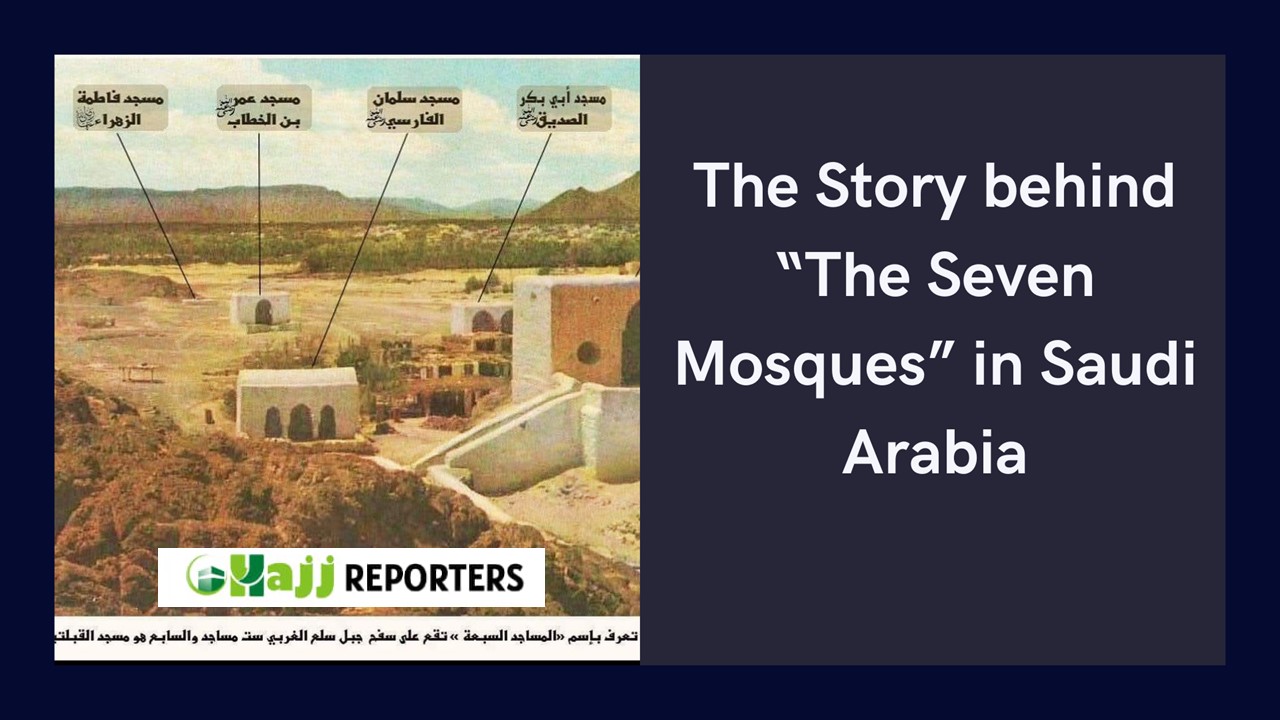
The area of the Seven Mosques (Al-Masājid al-Sab‘a) is located at the foot of Mount Sala‘ in Madinah, overlooking the site associated with the Battle of the Trench (Ghazwat al-Khandaq).
This historic area represents one of the most significant military and spiritual landmarks of early Islam. The mosques were built to commemorate locations where the Prophet Muḥammad ﷺ and his Companions are reported to have stood, prayed, or commanded during the battle. Although traditionally known as the Seven Mosques, today six mosques remain visible, with the seventh having disappeared over time.
Historical highlights:
The site lies west of Jabal Sala ‘, which served as a strategic defensive position during the Battle of the Trench (5 AH).
The mosques are attributed to figures such as the Prophet ﷺ, Abu Bakr, ‘Umar, ‘Ali, Fāṭimah, and Salman al-Fārisi (رضي الله عنهم), though these attributions are based on historical tradition rather than definitive proof.
The structures seen today date mostly to later Islamic periods, especially the Ottoman era, and were renovated multiple times.
The area reflects the military planning, unity, and spiritual resilience of the early Muslim community.
The Seven Mosques area remains a powerful reminder of Madinah’s layered history—where geography, faith, and struggle intersect—and continues to attract researchers, historians, and visitors interested in the physical landscape of the Prophet’s ﷺ seerah.
