


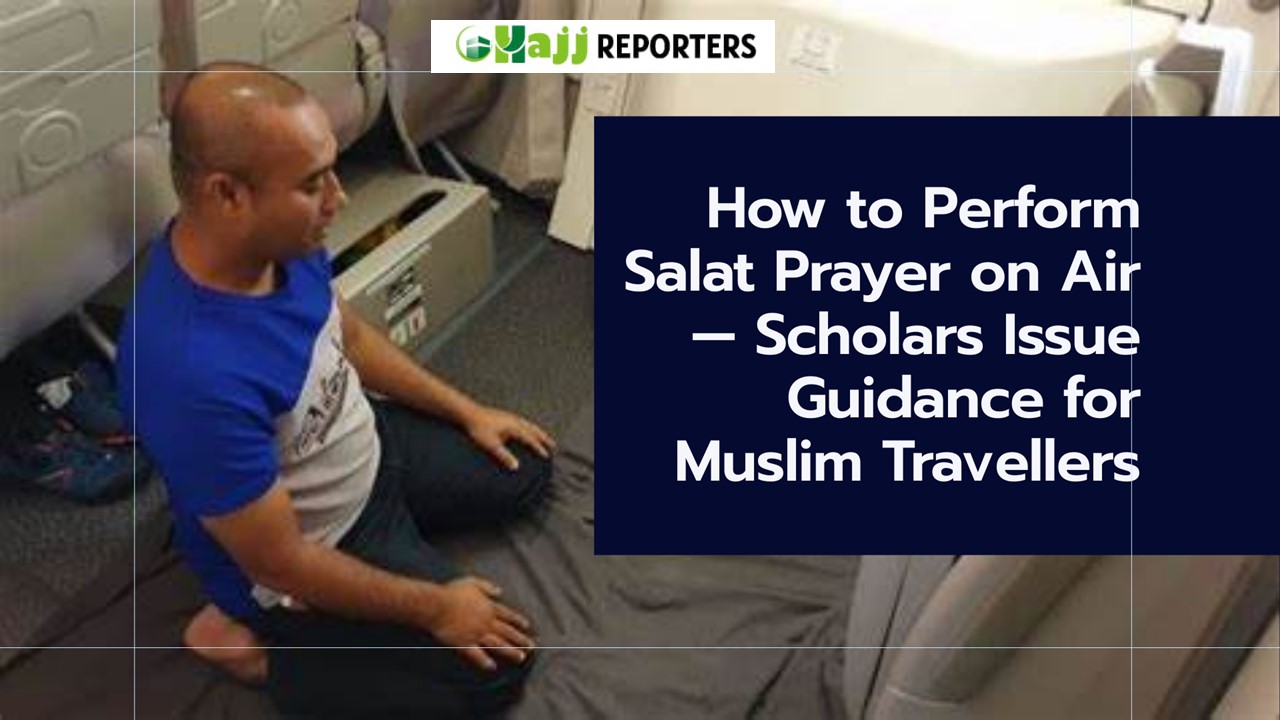
Islamic scholars have reiterated that Salat (prayer) remains obligatory for Muslims while travelling by air, outlining clear guidelines on how to observe prayers properly during flights.
In a brief advisory issued by Darul Iftaa Limbe, Malawi, Muslim travellers were reminded that prayer must not be abandoned due to air travel, stressing that Salat should be performed within its prescribed time and according to established Islamic rulings.
According to the guidance, prayers should be offered in a standing position while facing the Qiblah if a passenger is physically able to do so. Travellers are encouraged to seek a suitable space, such as near the aircraft galley, and to politely request assistance from cabin crew where necessary.
The advisory explained that the Qiblah direction can be determined using prayer applications, a compass, the aircraft’s flight map, or by consulting cabin crew. Passengers were also advised to adjust their direction during prayer if the aircraft changes course, where reasonably possible.
On prayer times, scholars clarified that Salah timings during flights are determined by the position of the sun relative to the aircraft, not the land below. “If the sun is still visible from the plane, Maghrib has not yet entered, even if it has set on the ground,” the statement noted.
The guidance further emphasised the importance of maintaining ablution (wudhu), advising travellers to prepare by wearing permissible socks that allow for masah if washing the feet becomes difficult. Tayammum, it said, is not allowed where water is available and wudhu can be performed.
Where standing or facing the Qiblah is not permitted by cabin crew, passengers may pray while seated, performing bowing and prostration through gestures. However, scholars noted that such prayers should be repeated after landing.
The advisory concluded by urging Muslim travellers to plan ahead for prayers during flights and remain mindful of their religious obligations while travelling.
